Herbert Hoover Quotes
In times of industrial depression, or great increase in the cost of living, whether brought about by war or by the ebb and flow of world prosperity, these populations, oppressed with misery, turn to political remedies for matters that are beyond human control.
Most people think that in a democracy, the government has more control over the economy than it really does as Hoover observed almost a century ago. However, the major issue between liberals and conservatives is whether or not the government should use the tools that it does have that might influence the economy and to what extent the government should ameliorate the damage that the poor and middle class suffers from the recession or depression. Unemployment insurance and food stamp distribution are basic examples of amelioration. When the Great Depression hit, Hoover was president and he chose not to use the powers of government and became America’s worst President at managing the economy.
Herbert Hoover, 1874-1964, 31st President of the United States (Republican, IA), “Some Notes On Agricultural Readjustment And The High Cost Of Living”, Saturday Evening Post, April 10, 1920
Sourced by: Eigen's Political and Historical Quotations


The Great Depression had worldwide reach. Just as Herbert Hoover and his followers felt that there was no role of the national government in dealing with the depression, Japan had a major faction that believed that the only thing to do was wait the economic cycle out. Hiranuma represented the more activist faction who saw the necessity of national government involvement.

This classic, notorious quotation was stated by President Herbert Hoover in the first year after the Stock Market Crash that triggered the Great Depression. It shows how out of touch Hoover and the Republican party was at the time. Unemployment was running around 25 percent and there was no social safety nets—people were literally starving and millions were homeless. Not only did Hoover oppose any unemployment relief, but he accused those who were advocating that of being unethical and immoral for doing so. His view was that the Federal Government should not interfere and that welfare or relief would weaken the moral fiber of the people. In 1932, the American Voters rejected him and choose FDR who advocated using the instrument of the Federal Government to ameliorate and who led the initiative for unemployment relief.

New York’s highest court


This was written in the early years of the Great Depression. Over 25 percent of Americans were out of world. The stock market had crashed and many banks failed wiping out family savings where there was any. Social Security, Bank and Stock Market Regulations were not yet passed. The New Deal government was just starting creating jobs, but there was great concern that the capitalistic system had failed. Thomas and other critics were right that the U. S. Government had not before used its machinery for “ease and security of living”; they called for the adoption of state socialism. President Roosevelt however instead reformed American capitalism by adding substantial regulation, provided direct relief to the unemployed poor, stimulated the economy, created Social Security, Federal Deposit Bank Insurance, unemployment insurance and initiated massive public works programs. It took almost a decade but American Capitalism was saved and transformed to the greatest industrial output and standard of living increase the world had known. It was not until 2008 that the capitalistic American economy melted down again. Regulation of corporations had diminished. The banks failed and had to be bailed out again but as the result of Social Security, Unemployment Insurance and other programs there was some cushioning of the effect of the Great Recession. The middle and lower class insecurity was back along with the wealthy taking a much larger proportion of the national wealth. The big difference was that few called for an end to capitalism and the political debate was on how best to fix the weaknesses of capitalism. Even most socialists around the world had built their Social Democracies around a capitalistic economic structure.

When he wrote this article, America was in the middle of the Great Depression. In its first 3 years, President Herbert Hoover, a great believer in private charity, was so rigid in his ideology, that he refused to allow the Federal Government to provide some relief to the vast number of people in need who had overwhelmed the capacity of private charities. At the same time, the more affluent whose generosity funded the charities, had seen their own fortunes slashed by the depression and the themselves were often failing. When Franklin Delano Roosevelt was elected, he was much more flexible and when Flexner was writing this article, the Federal Government was performing many functions that before were only provided by private organizations.


Communications were quite primitive and out of desperation many jobless men would just walk the main road to the next community in hopes of finding work there.


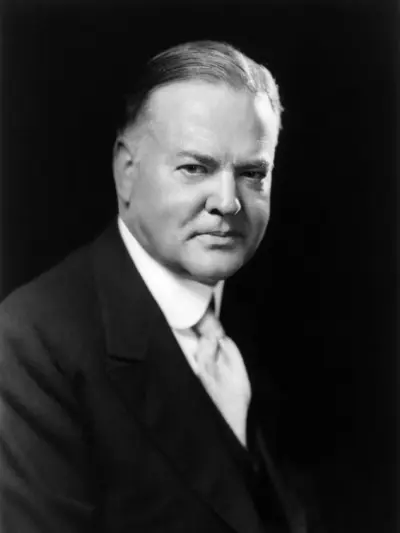
Herbert Clark Hoover was an American politician, businessman, and engineer, who served as the 31st president of the United States from 1929 to 1933. A member of the Republican Party, he held office during the onset of the Great Depression. Before serving as president, Hoover led the Commission for Relief in Belgium, served as the director of the U.S. Food Administration, and served as the third U.S. Secretary of Commerce.
