Herbert Hoover Quotes
They are playing politics at the expense of human misery.
This classic, notorious quotation was stated by President Herbert Hoover in the first year after the Stock Market Crash that triggered the Great Depression. It shows how out of touch Hoover and the Republican party was at the time. Unemployment was running around 25 percent and there was no social safety nets—people were literally starving and millions were homeless. Not only did Hoover oppose any unemployment relief, but he accused those who were advocating that of being unethical and immoral for doing so. His view was that the Federal Government should not interfere and that welfare or relief would weaken the moral fiber of the people. In 1932, the American Voters rejected him and choose FDR who advocated using the instrument of the Federal Government to ameliorate and who led the initiative for unemployment relief.
Herbert Hoover, 1874-1964, 31st President of the United States (Republican), Chastising members of Congress who introduced a bill to provide for unemployment relief during the Great Depression, Press Conference, December 9, 1930
Sourced by: Eigen's Political and Historical Quotations

Most people think that in a democracy, the government has more control over the economy than it really does as Hoover observed almost a century ago. However, the major issue between liberals and conservatives is whether or not the government should use the tools that it does have that might influence the economy and to what extent the government should ameliorate the damage that the poor and middle class suffers from the recession or depression. Unemployment insurance and food stamp distribution are basic examples of amelioration. When the Great Depression hit, Hoover was president and he chose not to use the powers of government and became America’s worst President at managing the economy.


The country was in the midst of the Great Depression with a huge part of the nation unemployed. President Hoover and the Republicans had refused to provide any direct assistance to the unemployed—there was no unemployment insurance then. They actually believed that there was a danger of corrupting workers by providing assistance and ruining the American workforce. FDR probably saved the nation from massive violence by providing direct help to the unemployed but notice the way that he had to phrase such a notion which was then regarded as radical and socialistic by many conservatives.

Seneca had been exiled when he wrote this.


When he wrote this article, America was in the middle of the Great Depression. In its first 3 years, President Herbert Hoover, a great believer in private charity, was so rigid in his ideology, that he refused to allow the Federal Government to provide some relief to the vast number of people in need who had overwhelmed the capacity of private charities. At the same time, the more affluent whose generosity funded the charities, had seen their own fortunes slashed by the depression and the themselves were often failing. When Franklin Delano Roosevelt was elected, he was much more flexible and when Flexner was writing this article, the Federal Government was performing many functions that before were only provided by private organizations.


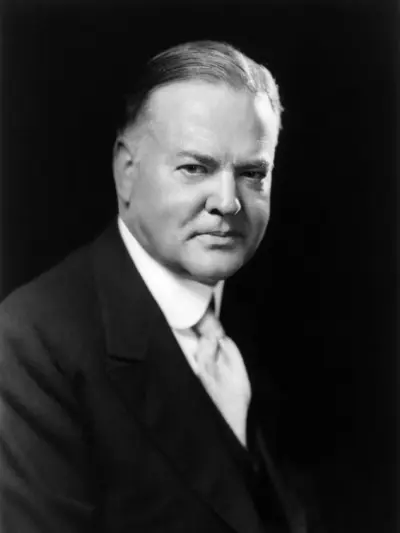
Herbert Clark Hoover was an American politician, businessman, and engineer, who served as the 31st president of the United States from 1929 to 1933. A member of the Republican Party, he held office during the onset of the Great Depression. Before serving as president, Hoover led the Commission for Relief in Belgium, served as the director of the U.S. Food Administration, and served as the third U.S. Secretary of Commerce.
