Abraham Flexner Quotes
We happen to be living in an era when, in consequence of human gullibility and fallibility, the world has been overtaken by panic and distress such as private initiative alone cannot cope with. To an extent that could previously never have been expected the cities, the states, and the central government have been compelled to undertake to provide relief where voluntary agencies have been unequal to the task.
When he wrote this article, America was in the middle of the Great Depression. In its first 3 years, President Herbert Hoover, a great believer in private charity, was so rigid in his ideology, that he refused to allow the Federal Government to provide some relief to the vast number of people in need who had overwhelmed the capacity of private charities. At the same time, the more affluent whose generosity funded the charities, had seen their own fortunes slashed by the depression and the themselves were often failing. When Franklin Delano Roosevelt was elected, he was much more flexible and when Flexner was writing this article, the Federal Government was performing many functions that before were only provided by private organizations.
Abraham Flexner, 1866-1959, Educator and Author, “Philanthropy”, The Atlantic Monthly, August 1935
Sourced by: Eigen's Political and Historical Quotations


Hoovervilles were camps of people who lived in city parks or empty land. Tar paper shacks sheltered some—others lived in boxes. People had no work and no prospects of work; they had no money for rent; they just lived a meager existence as best they could under conditions that today exist only in the third world. They were named Hoovervilles for the President at the time whose ineptness and philosophy simply let things deteriorate. Republicans were critical of many of Roosevelt’s economic policies, but the president would periodically remind them and the nation of what the situation was when the Republicans last ran the country.

What makes this a noteworthy political quotation is that when he made the statement, his party had lurched to the radical right and almost no one else in the Republican party would publicly say that the Federal Government had any legitimate role that involved social services, food distribution, welfare or health care. Also the Republican Presidential candidate the day before had been discovered writing off the poorest 43 percent of the country. Heller however, was up for reelection in a state what was hit much harder than most in the Great Recession and without Federal Assistance many state residents would be in terrible circumstances and Heller would not fare well in the election if he took the then required Republican ideology. Also, Heller came from a blue collar family and had a much different outlook than most Republicans of that particular time.

The country was in the midst of the Great Depression with a huge part of the nation unemployed. President Hoover and the Republicans had refused to provide any direct assistance to the unemployed—there was no unemployment insurance then. They actually believed that there was a danger of corrupting workers by providing assistance and ruining the American workforce. FDR probably saved the nation from massive violence by providing direct help to the unemployed but notice the way that he had to phrase such a notion which was then regarded as radical and socialistic by many conservatives.

The Pool Laws provided economic and food relief for the very poor—an early type of welfare. Malthus and other conservatives hated the Poor Laws, but many like Malthus felt it immoral to terminate what was then the only social safety net. And none of the critics could suggest anything better and especially anything that would eliminate poverty altogether. The same issues were to be fought out in America during the Hoover Administration when the Great Depression struck. Hoover’s refusal for government to be the social safety net together with his inability to improve the economy, led to his ousting and the establishment of the New Deal with FDR.


It was finally passed and signed into law on August 22, 1996


The Great Depression had worldwide reach. Just as Herbert Hoover and his followers felt that there was no role of the national government in dealing with the depression, Japan had a major faction that believed that the only thing to do was wait the economic cycle out. Hiranuma represented the more activist faction who saw the necessity of national government involvement.


The prime minister had a political and philosophical position that government should not interfere with or set or control pricing in the economy. However, a scandal broke out involving payday lending—short term lending the working class does to tide them over till pay day if they run out of money. Lenders were charging huge interest rates beyond anything that is conscionable. Cameron’s government placed controls on interest rates and other facets of that industry as they might have lost a vote of confidence in Parliament had they not acted. He was then questioned about the hypocrisy involved in his regulation, and he gave this amazing quotation, which was the classic reason for government price controls on the private sector that had been given by the Labor Party opponents for years. This also distressed extreme conservatives, who argue that market controls are always preferable to government controls.

Communications were quite primitive and out of desperation many jobless men would just walk the main road to the next community in hopes of finding work there.


The working and middle class wages and other income had been static for over 20 years while the wealthy had theirs increase several fold. The “rising tide” only lifted the largest boats.


This classic, notorious quotation was stated by President Herbert Hoover in the first year after the Stock Market Crash that triggered the Great Depression. It shows how out of touch Hoover and the Republican party was at the time. Unemployment was running around 25 percent and there was no social safety nets—people were literally starving and millions were homeless. Not only did Hoover oppose any unemployment relief, but he accused those who were advocating that of being unethical and immoral for doing so. His view was that the Federal Government should not interfere and that welfare or relief would weaken the moral fiber of the people. In 1932, the American Voters rejected him and choose FDR who advocated using the instrument of the Federal Government to ameliorate and who led the initiative for unemployment relief.
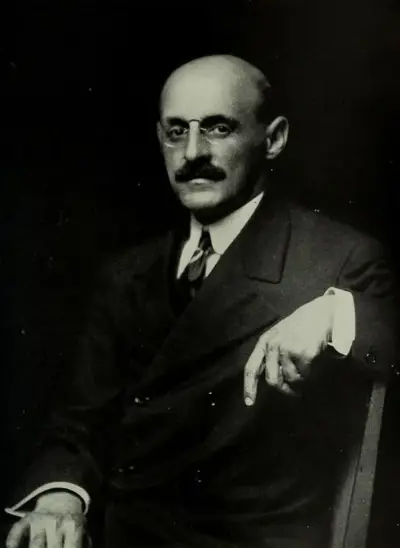
Abraham Flexner was an American educator, best known for his role in the 20th century reform of medical and higher education in the United States and Canada.
