Thomas Malthus Quotes
The relief now given by the Poor Laws is so widely extended that no man of humanity could venture to propose their immediate abolition.
The Pool Laws provided economic and food relief for the very poor—an early type of welfare. Malthus and other conservatives hated the Poor Laws, but many like Malthus felt it immoral to terminate what was then the only social safety net. And none of the critics could suggest anything better and especially anything that would eliminate poverty altogether. The same issues were to be fought out in America during the Hoover Administration when the Great Depression struck. Hoover’s refusal for government to be the social safety net together with his inability to improve the economy, led to his ousting and the establishment of the New Deal with FDR.
Thomas Malthus, 1766-1834, British Cleric and Economist, Essay on Population
Sourced by: Eigen's Political and Historical Quotations


Welfare reform was desired by liberals as well as conservatives. They just had different ideas of how best to reform the system.


When budget cutting was deemed necessary, the Governor was a strong voice for not cutting services to the most needy.


It was finally passed and signed into law on August 22, 1996


When he wrote this article, America was in the middle of the Great Depression. In its first 3 years, President Herbert Hoover, a great believer in private charity, was so rigid in his ideology, that he refused to allow the Federal Government to provide some relief to the vast number of people in need who had overwhelmed the capacity of private charities. At the same time, the more affluent whose generosity funded the charities, had seen their own fortunes slashed by the depression and the themselves were often failing. When Franklin Delano Roosevelt was elected, he was much more flexible and when Flexner was writing this article, the Federal Government was performing many functions that before were only provided by private organizations.


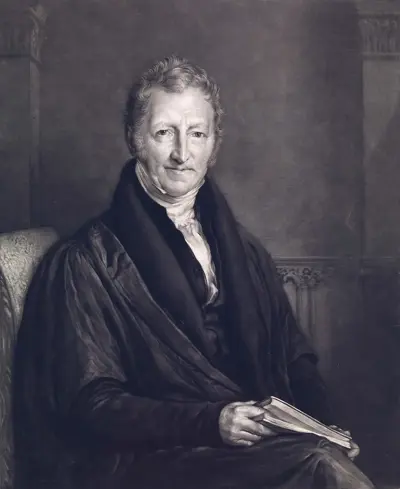
Thomas Robert Malthus FRS was an English cleric, scholar and influential economist in the fields of political economy and demography.
