Ron Paul Quotes
Why is it is claimed that if people won't or can't take care of their own needs, that people in government can do it for them?
Paul, Ron. Liberty Defined: 50 Essential Issues That Affect Our Freedom. Grand Central Publishing, 2011, p. 11.


The Pool Laws provided economic and food relief for the very poor—an early type of welfare. Malthus and other conservatives hated the Poor Laws, but many like Malthus felt it immoral to terminate what was then the only social safety net. And none of the critics could suggest anything better and especially anything that would eliminate poverty altogether. The same issues were to be fought out in America during the Hoover Administration when the Great Depression struck. Hoover’s refusal for government to be the social safety net together with his inability to improve the economy, led to his ousting and the establishment of the New Deal with FDR.


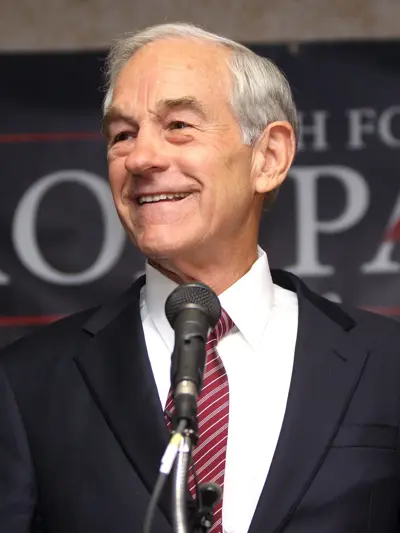
Ronald Ernest Paul is an American author, physician, and retired politician who served as the U.S. Representative for Texas's 22nd congressional district from 1976 to 1977 and again from 1979 to 1985, and for Texas's 14th congressional district from 1997 to 2013. On three occasions, he sought the presidency of the United States: as the Libertarian Party nominee in 1988 and as a candidate for the Republican Party in 2008 and 2012. A self-described constitutionalist, Paul is a critic of the federal government's fiscal policies, especially the existence of the Federal Reserve and the tax policy, as well as the military–industrial complex, the war on drugs, and the war on terror. He has also been a vocal critic of mass surveillance policies such as the USA PATRIOT Act and the NSA surveillance programs. He was the first chairman of the conservative PAC Citizens for a Sound Economy, a free-market group focused on limited government, and has been characterized as the "intellectual godfather" of the Tea Party movement, a fiscally conservative political movement that is largely against most matters of interventionism.
