Jean-Jacques Burlamaqui Quotes
If, for the smallest faults, the people had a right to resist or depose their sovereign, no prince could maintain his authority, and the community would be continually distracted; such a situation would be directly contrary both to the end and institution of government, and of sovereignty. It is therefore right to overlook the lesser faults of sovereigns, and to have a regard to the laborious and exalted office, with which they are invested for our preservation
See {620510} for a much older expression of this idea.
Jean-Jacques Burlamaqui, 1694–1750, Swiss Counsel of State & Political Philosopher, The Principles of Political Law, Part II, Chapter VI, 1748
Sourced by: Eigen's Political and Historical Quotations


Yazid ibn al-Walid ibn 'Abd al-Malik. This is an Islamic doctrine that operates to this day together with the stricture that a bad ruler must be endured and not revolted against UNLESS he does not follow his Islamic religious obligations. This is why many Islamic rulers curry favor with the clerics. As long as they do not claim he is violating the word of God, his rule is safe from revolution. However, if the clerics turn on him, he is in deep trouble. Thus Saudi Arabia endures a monarchy and the ruling family pays the Wahhabi enormous sums to avoid their religious condemnation.

Many American colonists had relatives and friends in England, and Paine argued that American independence would help and not het the English people.


In 1848 a number of revolutions flared throughout Europe with a call for democracy rather than monarchy. The Prussian king was one of those who really believed that he was selected by God to rule, was very frightened and tried to enlist the Queen and England to present a united front against the revolutionaries. England, which had already had a strong functioning parliament and extensive voting suffrage, protected most of the rights of its citizens and was a Constitutional Monarchy where there were limits to the power of the monarch. Further, Victoria was extremely popular and in many ways was far ahead of the electorate in terms of modern democratic reforms. So she was not in the panic of many of the other crowned heads of Europe were in. Somewhat following the example of England, King William IV allowed a parliament and minimized the strong military role that characterized Prussia. Most of the 1848 revolutions failed to sieze governments but, as with Prussia, forced reforms in what was a long movement to European democracy that would take another 150 years. Note also the logic about religion. Since the revolutionists did not believe in the divine right of kings, they opposed God’s will on earth. Therefore, they opposed God and must be atheists. Almost all counter revolutionary accusations included the claim—often not true—that the revolutionaries were atheists.


Honore Gabriel Victor Requiti

The assumption of one supreme authority being necessary for a state, has been the most common assumption in almost all cultures and times before the American Revolution. What is amazing is that the Founding Fathers rejected this notion in favor of our complex system of checks and balances restrained by a Constitution which no society had ever tried before. England in contrast as it became more democratic, simply shifted the supreme, uncontrollable entity from the King to the Parliament which it is even today. Parliament can do virtually anything unrestrained by anything except their judgment and tradition.


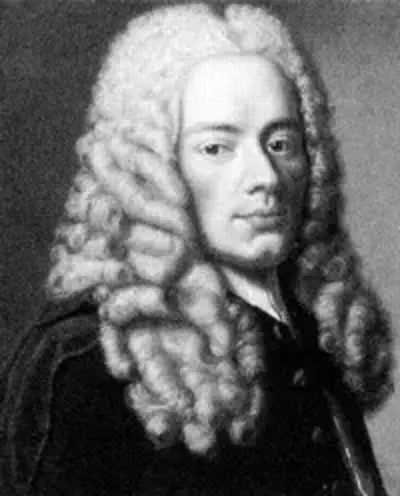
- Born: July 13, 1694
- Died: April 3, 1748
- Nationality:
- Profession:
Jean-Jacques Burlamaqui was a Genevan legal and political theorist who popularised a number of ideas propounded by other thinkers.
