Barry Goldwater Quotes
I'd drop a low-yield atomic bomb on Chinese supply lines in North Vietnam.
Barry Goldwater, 1909-1998, U. S. Senator (Republican AZ), Republican Nominee for President, Quoted in Newsweek, May 20, 1963
Sourced by: Eigen's Political and Historical Quotations


Chomsky was not asserting this statement as the truth. He was making the statement assuming that the absurdity of it would be clear to the listener and they would also realize that was what the then government policy was. North Vietnamese had infiltrated the South and had much support in many of the South Vietnamese villages. When the U. S. bombed the North Vietnamese—and the Vietnamese inhabitants—of those villages, the intention was indeed to help the South Vietnamese. If Chomsky were a politician running for office, his opponent might well have taken this quote and used it to “prove” that Chomsky supported the American effort in the Vietnam War when he was a vehement opponent.


The only way we want to give them [the Iranians] arms is dropping them from the bay of a B-1 bomber.
Referring to the Iranian arms scandal:

Up to that time U. S. policy was to provide training and assistance to the South Vietnamese government and military, but not to attack the North. America had backed a corrupt and incompetent South Vietnamese government and Bundy and other policy makers were convinced that the North Vietnam would win, if the fighting and governing were solely left to the South Vietnamese. Johnson, who had resisted this policy for several weeks finally acceded. It was a major escalation of the Vietnam War.

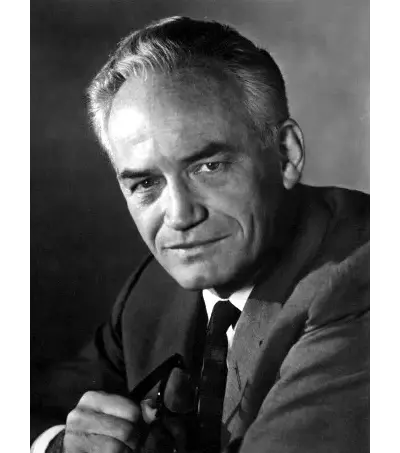
Barry Morris Goldwater was an American politician, statesman, businessman, United States Air Force officer, and author who was a five-term Senator from Arizona (1953–1965, 1969–1987) and the Republican Party nominee for president of the United States in 1964. Goldwater is the politician most often credited with having sparked the resurgence of the American conservative political movement in the 1960s. Despite his loss of the 1964 presidential election in a landslide, many political pundits and historians believe he laid the foundation for the conservative revolution to follow, as the grassroots organization and conservative takeover of the Republican party began a long-term realignment in American politics helped to bring about the "Reagan Revolution" of the 1980s. He also had a substantial impact on the libertarian movement.
