Harriet Jacobs Quotes
I went to Duff Green's Row, Government head-quarters for the contrabands here. I found men, women and children all huddled together, without any distinction or regard to age or sex. Some of them were in the most pitiable condition. Many were sick with measles, diptheria [sic], scarlet and typhoid fever. Some had a few filthy rags to lie on; others had nothing but the bare floor for a couch. There seemed to be no established rules among them; they were coming in at all hours, often through the night, in large numbers, and the Superintendent had enough to occupy his time in taking the names of those who came in, and of those who were sent out. His office was thronged through the day by persons who came to hire these poor creatures, who they say will not work and take care of themselves. Single women hire at four dollars a month; a woman with one child, two and a half or three dollars a month. Men's wages are ten dollars per month. Many of them, accustomed as they have been to field labor, and to living almost entirely out of doors, suffer much from the confinement in this crowded building.
Harriet Jacobs, 1813-1897, Escaped Slave and Writer, “Life Among The Contrabands”, The Liberator, September 5, 1862
Sourced by: Eigen's Political and Historical Quotations

In the early days of the Civil War slaves who escaped and reached the Northern lines were routinely returned to their Southern owners as the Fugitive Slave Act required. The first actual emancipation of the Civil war was not the President’s proclamation but was Butler who as a Union General ordered that the slaves escaping from Virginia no longer be returned. He was accused of violating the then existing law, however he had a legal rationale which hoisted Virginia on its own petard.

The general issued a military order emancipating slaves in Florida, Georgia and South Carolina. President Abraham Lincoln rescinded the order feeling it was too premature and it would cause the slave states that stayed in the Union--Delaware, Maryland, and Kentucky--to go over to the Confederates.

This letter was signed by a local white Priest and two other leading planters. This quotation gives us a marvelous feeling for what occurred when parts of the South was occupied by the Union Army shortly after the Emancipation Proclamation was issued. Minor and his fellows just did not “get it.” The concept of freedom of the slaves was intellectually so foreign to them, that they wanted the Union Army to “compel” the freed slaves to work. They were horrified that slaves went wherever they wanted, and they were most outraged when former slaves who had enlisted in the Army, would “visit” their old plantation setting such a terrible example. The letter gives us a perspective on how difficult it was to change the mental set of Southern Whites and why Reconstruction was so difficult. The year of the letter is somewhat uncertain as the original letter appears to be dated 1862 but the writing is not clear and that date does not comport with the history of the era and we believe 1863 was the correct year. The photograph is of the first official colored troops mustered into the Union Army. They were called the Louisiana Native Guards and contained the ex slaves who went over to the Union side just before the time this slave owner complained. These ex slaves, in uniform, and with arms would sometimes visit the plantations where they and been enslaved, thrilling the remaining slaves and infuriating owners like Minor.
Butler was at the time the Union general in charge of Louisiana. He had on his hand a large group of slaves whose owners had abandoned the area. There was no emancipation yet. He wrote for instructions. The result was the first actual emancipation of slaves.
This marvelous quotation gives us a picture of the essence of the conflict in conception of freedom between Southern whites and negroes. There was no way to change the large majority of whites’ opinions and it is easy to see why Jim Crow and Southern discrimination evolved as it did. The emancipated Blacks had insufficient power or resources and there was not enough effort or success at changing white attitudes and no where near enough law enforcement to impose the view on the majority of the Southern white population.


Ever since the Civil War, there has been an imbalance between the areas of the country with large unemployed populations and those areas where jobs were available. Even in 1870, the authorities were trying to get the unemployed to relocate but this was a hard thing to do at the time—physically, economically, and psychologically. It was not until the 2nd World War when huge numbers of Blacks migrated from areas of poor economic prospects in the South to areas of opportunity in the North. Also, note the classic welfare dilemma expressed whereby if humanitarian assistance is provided, people will not be desperate enough to move to areas with better opportunities.
Some whites began to understand the negative effect that slavery had on the Negroes. He like many Northerners interested in the rehabilitation of former slaves was convinced that a strong education program was necessary and the ex-slaves should not be dependent in their ex-masters for the education and acclimation to American life. However, with a President (Andrew Johnson) uninterested in Black development and a local white population totally opposed to such efforts only a little progress was made and the consequences affected America for the next 100 years.

There was little thought of emancipating slaves or their value to the South by the senior officers of the Union Army at the beginning of the war. The Secretary of War changed that. See {629183}for a typical Union General’s view at the beginning of the war.


There was little thought of emancipating slaves or their value to the South by the senior officers of the Union Army at the beginning of the war. The Secretary of War however changed that. See {629184}.

Benjamin was the Confederacy’s strongest proponent for use of Negro troops in exchange for a promise of freedom. Ironically, the racial prejudice of the Southern soldier may well have doomed the South’s last chance for independence. Lee, although he personally favored such a course of action, could not get a general sentiment from the army as a whole.

Negotiations regarding the exchange of prisoners and property. This was his view of his supposed obligation to return Negro slaves who had escaped and gone to the British during the war. The treaty of peace specified that all “property” including slaves, taken by, the British be returned to the Americans. But he and other officers did not always do so as they thought they had higher moral obligations. See {621936} for example.

The letter was written in the supposed style of a Black after Emancipation and includes most of the ugly false stereotypes of the worst of the racists of the present and the slaveowners of past times. Williams stated that he was not a racist and was trying to make a point about freedom required risk and responsibility. However, the effort was interpreted by many people, Black and white, to be insulting and a put down of African Americans. At the same time, although most of the Tea Party members were not racists, most of the racists in America were supporters of the Tea Party. Those people interpreted the quotation as "telling it like it is" about Blacks who do not want the responsiblities and risks of freedom and are not yet developed sufficiently to be equal citizens in a democracy.

Parker and other escaped slaves in Christiana fought off slave catchers and killed the slave owner leading them. Charged with treason, he escaped to Canada with his family and lived there the rest of his life. While not a polished writer, after he himself had escaped and went to Christiana and leaned to read and write. He wrote this narrative of his life as a slave—one of the few written works we have from slaves.
After the Civil War and Reconstruction, the American nation was still bitterly divided intelelctually, socially, emotionally and poliotically. In an effort to bring more unity to America, most of the power stucture and the influentials of the nation began to avoid those issues that would divide North and South and try and promote a narrative that both sides might be able to live with. And this is what Zeitz describes in this quotation. America went through a period of Revisionist History that even in the 21st century was held by many people. It wasn't until the middle of the 20th century that the real history and narrative of the Civil War and Reconstrution emerged from the few academics who had all along criticized the fabricated narritive that did unify the country at the cost of historical accuracy and truth. Many scholars point out that the price that America paid for this unity was the Jim Crow era and a century of legalized racism. Much of the nation was built on the labor of Negro slaves and the victims of the slavery era, also bore the brunt of American unity and reconcilliation.

This is an important quotation because it shows that slavery was the principle reason that the South succeeded and began their rebellion. In the early 20th century, there was a movement to make the Confederacy and the rebellion more noble by promoting the idea that the Civil War was fought by the South for more lofty reasons such as States Rights, Original Construction, different economic philosophies and the like. This was a more noble cause then the right to deny other human beings their rights, to own other human beings who they could beat, torture, sexually use and even murder them was a pretty selfish and demeaning reason to have started a rebellion that would then cost more Americans their lives than any other American conflict. The succession documents and others of the Southern States and the Confederacy make it clear that slavery was THE issue and fleeting references to any of the others were only made to complain about the potential effect on abolition and the refusal of the abolitionist states to cease aiding and protecting fugitive slaves.

The military weapon of freeing the slaves was advocated from the earliest days of the Civil War. However, most Northern political leaders were sure that the South would be economically broken by emancipation, and many were hoping to end the rebellion swiftly by some military victories, and the Confederate soldiers could return to an economically viable South. If the slaves were freed, Southern soldiers would have little to return to and would all have to become laborers and thus would fight then to the death. However, the more battlefield success the South had, the more the combination of the moral pressure of the abolitionists and the practical strategic pressure of those who wanted to cripple the South militarily by freeing the slaves, influence Lincoln’s decision.

Much of the South was so insular that people knew nothing about the notion of abolition and just assumed that no one would ever consider freeing the slaves. Many never knew that it was the South that first fired on the Union troops and flag. If the North won the war, the assumption was that Northerners would then own the plantations and the valuable slaves. In reality, while all slaves were emancipated in the South, very few plantations and farms were confiscated from their Southern owners by Northerners despite the fact that there was political pressure in the North to confiscate the land of all rebels who had committed treason and use the value to repay the Union bonds and care for the wounded Union veterans and the widows of dead Union Soldiers. Eggleston was an accomplished writer who had served in the Confederate army of the Civil War. 20 year after the war he wrote a series of articles for the prestigious Northern Atlantic Monthly trying to convey the war from the Southerner’s point of view.


This quotation illustrates the strong abolitionist tendency in the Ohio Territory. Under this clause, escaped slaves from Southern states would not be returned by the state authorities. Even more insulting to the slave enthusiasts of the South, if a Southerner brought any slaves into Ohio with them as was common for Southerners traveling with their personal slaves or horse team drivers, those slaves would be free. An interesting aspect of this clause of the Ohio Constitution was that the beginning was, word for word, copied from the Northwest Ordinance of 1787. See {618100}.

Lincoln had promised amnesty to Southerners who would pledge loyalty to the Union. What many feared was that this would include slave owners re-enslaving their former "property," or that the government would allow them to do so in order to stop the rebellion.

In early New England the General Court served as both a legislature and a judiciary before separation of powers was introduced. 5 years later the Court banned importing African slaves at all. While slavery was not common in Rhode Island, the laws was not seriously enforced on those who would defy them. It does represent a public anti-slavery sentiment that existed in Early America. It would take 200 years for Rhode Island to finally eliminate all forms of slavery.
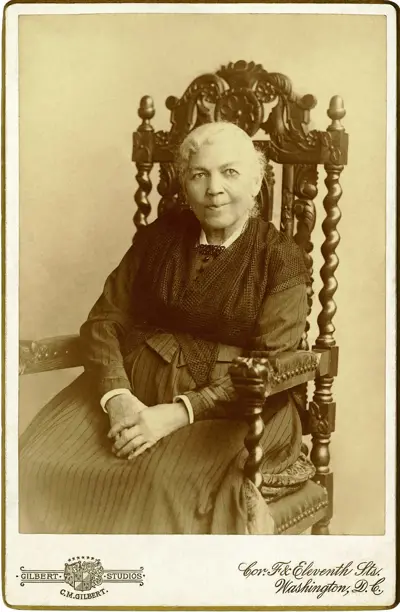
Harriet Jacobs was an African-American writer, whose autobiography, Incidents in the Life of a Slave Girl, published in 1861 under the pseudonym Linda Brent, is now considered an "American classic". Born into slavery in Edenton, North Carolina, she was sexually harassed by her enslaver. When he threatened to sell her children if she did not submit to his desire, she hid in a tiny crawl space under the roof of her grandmother's house, so low she could not stand up in it. After staying there for seven years, she finally managed to escape to the free North, where she was reunited with her children Joseph and Louisa Matilda and her brother John S. Jacobs. She found work as a nanny and got into contact with abolitionist and feminist reformers. Even in New York, her freedom was in danger until her employer was able to pay off her legal owner.
