Alexander the Great Quotes
I admit that Mendeleev has two wives, but I have only one Mendeleev.
Dmitri Ivanovich Mendeleev was a great scientist who had created the famous Periodic Table of the Elements. He was also the major science advisor to the Czar and his government. He had been divorced but had not waited the required 7 years before remarrying. Therefore according to Russian religious law at the time, he was legally a bigamist, and could not hold a position in the government and should be prosecuted. A complaint was made to the Czar and this was his reply. There are a few scholars who do not feel this quotation was documented well enough to be accepted.
Alexander III [The Peacemaker], 1845-1894, Czar or Russia, Quoted in O. E. Ozarovskoi, D. I. Mendeleev v vospominaniiakh
Sourced by: Eigen's Political and Historical Quotations


In 1963 Great Britain was rocked by the Profumo affair where the Defense Minister and a Russian officer were sharing the same mistress.

Jackson's Secretary of War, John Henry Eaton, 1790-1856, had been having an affair with a married woman with a proclivity toward promiscuity. Her husband committed suicide and Eaton married her causing one of the great scandals of American history. It split Andrew Jackson's cabinet and ended with Jackson, who supported Eaton, replacing the entire cabinet except the Postmaster General. Vice President John C. Calhoun's chances for the Presidency died as he and Jackson broke over this scandal.

Luther’s logic was that polygamy was sanctioned in the Old Testament and never specifically forbidden in the New Testament. This fact totally puzzled the American Mormons when the Protestants railed against the immorality of their plural marriages.


This was the decision that sanctioned anti-polygamy laws.


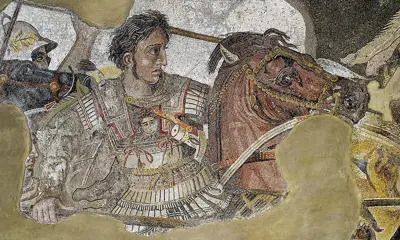
Alexander III of Macedon, commonly known as Alexander the Great, was a king (basileus) of the ancient Greek kingdom of Macedon and a member of the Argead dynasty. He was born in Pella in 356 BC and succeeded his father Philip II to the throne at the age of 20. He spent most of his ruling years on an unprecedented military campaign through Western Asia and Northeastern Africa, and by the age of thirty, he had created one of the largest empires in history, stretching from Greece to northwestern India. He was undefeated in battle and is widely considered one of history's most successful military commanders.
