ALEXANDER THE GREAT
(Alexander III of Macedon | Alexander III)
The offer of Darius was to pay him ten thousand talents, to cede to him all the countries west of the Euphrates, and to give him his daughter in marriage. Parmenio had urged him to take the offer. Alexander then went on and defeat Darius and the Persions who far outnumbered his forces. Asia then had one king who was more popular than Darius had been.
The largest kingdom the world had known was divided up among his generals.
His army had been so successful that many of his men had all the riches they ever dreamed of and great glory as well. Some just wanted to slow down and enjoy the conquered lands where they had been received very cordially as Alexander’s “occupation” was much more benign than the Asian rulers had been. Most however wanted to go back to Macedonia and enjoy their wealth and prestige. This statement of Alexander’s turned most of the men around.
Any fortress can be stormed provided there is a way up for a donkey with a load of gold on his back.
The greatest general and conqueror always tried to avoid a battle and casualties whenever possible. He was a master and bribing corrupt officials to surrender forts and cities or to disclose weaknesses in the defense. Gold was one of his major weapons.
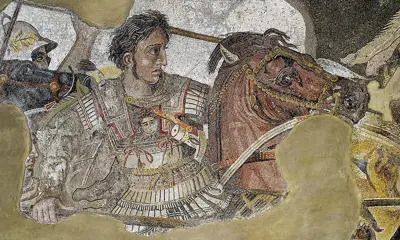
Alexander III of Macedon, commonly known as Alexander the Great, was a king (basileus) of the ancient Greek kingdom of Macedon and a member of the Argead dynasty. He was born in Pella in 356 BC and succeeded his father Philip II to the throne at the age of 20. He spent most of his ruling years on an unprecedented military campaign through Western Asia and Northeastern Africa, and by the age of thirty, he had created one of the largest empires in history, stretching from Greece to northwestern India. He was undefeated in battle and is widely considered one of history's most successful military commanders.
