Alexander the Great Quotes
Who does not desire such a victory by which we shall join places in our Kingdom, so far divided by nature, and for which we shall set up trophies in another conquered world?
Curtius Rufus, Quintus. History of Alexander, translated by J. C. Rolfe, vol. 2, Harvard UP, 1946, p. 441.

William the Conqueror. The King had come ashore and fell forward in the sand on his face and hands. Showing a sense of humor, he hade this statement. Shortly thereafter he took England militarily at Hastings and seized it politically.

Buchanan was then Secretary of State.


Xerxes was as the Texans say, “All hat and no cattle.” He had delusions of grandeur and was quite unsuccessful as a conqueror.


He didn’t quite conquer the whole world, but he did control most of it. One substantial difference between him and others, is that the Mongols were not interested in managing an Empire, All they wanted was an annual payment of tribute, and if that were forthcoming, the left the conquered cities and kingdoms to their own management and governance.


This statement was made after he had led the Muslim Ottoman Turkish Army to success in capturing Constantinople—Byzantium, Istanbul—bringing the Byzantine Empire (Eastern Roman Empire) to an end. He had his sights set on the Western Roman Empire next which was the remainder of what they knew of as the world then.

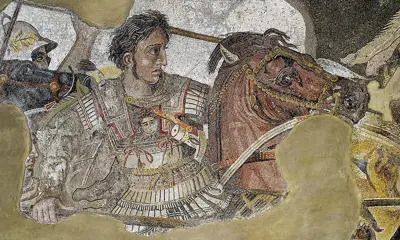
Alexander III of Macedon, commonly known as Alexander the Great, was a king (basileus) of the ancient Greek kingdom of Macedon and a member of the Argead dynasty. He was born in Pella in 356 BC and succeeded his father Philip II to the throne at the age of 20. He spent most of his ruling years on an unprecedented military campaign through Western Asia and Northeastern Africa, and by the age of thirty, he had created one of the largest empires in history, stretching from Greece to northwestern India. He was undefeated in battle and is widely considered one of history's most successful military commanders.
