Alexander the Great Quotes
To do good, and be evil spoken of, is kingly.
His army had been so successful that many of his men had all the riches they ever dreamed of and great glory as well. Some just wanted to slow down and enjoy the conquered lands where they had been received very cordially as Alexander’s “occupation” was much more benign than the Asian rulers had been. So some of Alexander’s men were critical of Alexander and in effect, Alexander said that the complaints are what a successful king should expect after so much success and popularity. This quotation was inscribed in Latin on the town-hall of Zittau, in Saxony during the reign of Frederick The Great. Politicians have been comforted by Alexander’s quotation even to modern times. Also, see {632232} for Voltaire’s version of Alexander’s statement.
Alexander III (Alexander the Great), 356-323 BC, King of Macedonia, Quoted in Plutarch, Apothegms
Sourced by: Eigen's Political and Historical Quotations

When effective leaders do great things for their society which benefits as a result, there are usually some ingrates who will complain about the ruler or leader. When President William Clinton created a balanced budget and at the same time created more jobs than any other President in history, all with excellent growth rates and very low inflation, there were still those who complained about Clinton. The very successful rulers or politicians tend to produce what Voltaire called “ingrates”, but the leader’s behavior that produced the ingrate was noble. See Alexander the Great {632232} who seems to have first uttered this principle.


- Born:
- Nationality: Scottish
- Profession: Poet
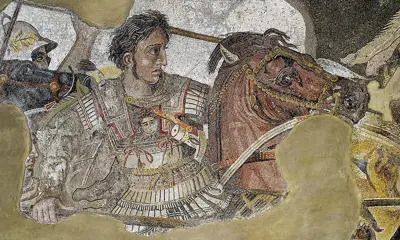
Alexander III of Macedon, commonly known as Alexander the Great, was a king (basileus) of the ancient Greek kingdom of Macedon and a member of the Argead dynasty. He was born in Pella in 356 BC and succeeded his father Philip II to the throne at the age of 20. He spent most of his ruling years on an unprecedented military campaign through Western Asia and Northeastern Africa, and by the age of thirty, he had created one of the largest empires in history, stretching from Greece to northwestern India. He was undefeated in battle and is widely considered one of history's most successful military commanders.
