Alexander the Great Quotes
My hopes.
Alexander’s move was a stroke of genius. He wanted to amass a great army but did not have the funds in the royal treasure to pay for it. Instead of squeezing the nobles for more funds, he gave everything away. This signaled a willingness to share the wealth so that the nobles financed the army so that they could amass more with the booty of victory. Perdiccas and a few others refused their shares and committed themselves to Alexander’s “hopes.” See {612208} for Alexander’s mother’s view of his generosity later.
Alexander III ["The Great"], 356-323 BC, King of Macedonia, Response to the question of Perdiccas one of the nobles amongst whom Alexander had divided his royal property. Perdiccas asked what Alexander would have left for himself. Quoted in Plutarch, The Parallel Lives: Alexander
Sourced by: Eigen's Political and Historical Quotations

One of the reasons that Alexander was able to conquer and control so much of the world at the time was his concept of decentralization of leadership, management, and delegation of authority. This was very unusual and not appreciated by other rulers, including his own parents. He also did not seek personal riches or creature comforts and did not spend much time lusting after women despite the fact that his mother frequently sent them to him.


King was speaking from a carefully prepared text which did not include the “I have a dream” passage. Jackson, sitting behind the speakers podium, in a loud stage whisper during a pause in King’s speech. King thought for a second or so, pushed is prepared speech aside, gripped both sides of the podium, and launched into what is now considered the iconic phrase of the March on Washington if not the entire civil rights movement, stimulated by the urging of the great singer.


- Born:
- Nationality: Scottish
- Profession: Poet
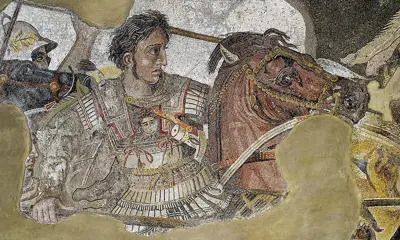
Alexander III of Macedon, commonly known as Alexander the Great, was a king (basileus) of the ancient Greek kingdom of Macedon and a member of the Argead dynasty. He was born in Pella in 356 BC and succeeded his father Philip II to the throne at the age of 20. He spent most of his ruling years on an unprecedented military campaign through Western Asia and Northeastern Africa, and by the age of thirty, he had created one of the largest empires in history, stretching from Greece to northwestern India. He was undefeated in battle and is widely considered one of history's most successful military commanders.
