Morrison R. Waite Quotes
Polygamy has always been odious among the northern and western nations of Europe, and, until the establishment of the Mormon Church, was almost exclusively a feature of the life of Asiatic and of African people.
This was the decision that sanctioned anti-polygamy laws.
Morrison R. Waite, 1816–1888, U. S. Supreme Court Justice Reynolds v. United States, 1878
Sourced by: Eigen's Political and Historical Quotations


Von Wackerbarth was one of the many Mormon haters of his day. His quotations have value not for the accuracy of the facts which are scant, but to indicate what much of public opinion regarding Mormons was in that day.


At the time polygamy was approved of by the Mormons. However they were pressured to accept monogamy in order to have peace with the rest of the nation. The Mormon church changed its doctrine and Mormons may only have a single wife. However, there are some dissident Mormon groups that still illegally practice polygamy.
Describes the contest between President Ulysses S. Grant and the Mormons over the issue of polygamy in the 1860s

Luther’s logic was that polygamy was sanctioned in the Old Testament and never specifically forbidden in the New Testament. This fact totally puzzled the American Mormons when the Protestants railed against the immorality of their plural marriages.


He was unfamiliar with a similar custom in Bohemia. See {610974}.
Young had been monogamous for 18 years when Church founder and leader Joseph Smith ordered him to take more wives.
Despite opposition of the dominant Communist Party, she had been elected 7 times in a row. She was one of the few non-communist deputies.


Young said when Utah was admitted as a state, it would then have this right
We count on Mormon assemblages to


This is an area in which there is great agreement between an Islamic extremist with Western thought with the exception of the ‘division’ of labor which in effects proscribes different roles for men and women regardless of which they prefer and does not allow a sharing. However, this view is very much in accord with Jewish and Christian Fundamentalist views. So the fundamentalists of these three religions agree with each other and disagree with their respective modernists.
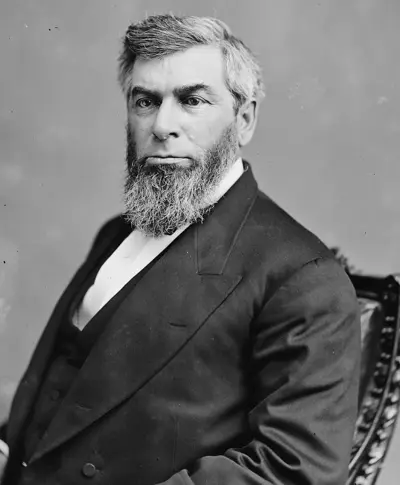
Morrison Remick "Mott" Waite was an attorney, judge, and politician from Ohio. He served as the seventh Chief Justice of the United States from 1874 to his death in 1888. During his tenure, the Waite Court took a narrow interpretation of federal authority related to laws and amendments that were passed during the Reconstruction Era to expand the rights of freedmen and protect them from attacks by vigilante groups such as the Ku Klux Klan.
