Melville Fuller Quotes
Polygamy is abhorrent to the sentiments and feelings of the civilized world.
Melville Fuller, 1833-1910, Chief Justice of the U. S. Supreme Court, Mormon Church v. United States, 1890
Sourced by: Eigen's Political and Historical Quotations


This was the decision that sanctioned anti-polygamy laws.


The Mormon Church at that time allowed plural marriage. Men could have many wives. The Mormons—especially those who had moved to Utah—had organized many civic functions and performed much of the role that local and State governments did elsewhere in the country. The discrimination that Mormons faced in much of the nation was extreme including lynching and other physical attacks. So Mormons banded together in communities and their church became their local government. This together with the plural marriage offended many other Americans. The wall of separation of church and state was collapsing on many fronts with the Mormon Church assuming many governmental functions in Mormon areas and the Federal, State and local governments interfering with the personal and religious activities of the Mormons. This is one of the few occasions in American history where a President publicly criticized a religion in an official function. It took time and patience, but the issues were finally resolved, and discrimination against Mormons is rare, unusual and condemned by all levels of government and most Americans.


In 1896 Utah and the Mormon Church had banned polygamy, but U.S. Congressman, Brigham Roberts, 1857-1933, (Democrat, UT) had married three wives when polygamy had been legal. He refused to break his vows to his wives and leave two of them, and despite his election and almost a year of Congressional service, the House voted to exclude him. Grandfather of President John F. Kennedy


Luther’s logic was that polygamy was sanctioned in the Old Testament and never specifically forbidden in the New Testament. This fact totally puzzled the American Mormons when the Protestants railed against the immorality of their plural marriages.


Dmitri Ivanovich Mendeleev was a great scientist who had created the famous Periodic Table of the Elements. He was also the major science advisor to the Czar and his government. He had been divorced but had not waited the required 7 years before remarrying. Therefore according to Russian religious law at the time, he was legally a bigamist, and could not hold a position in the government and should be prosecuted. A complaint was made to the Czar and this was his reply. There are a few scholars who do not feel this quotation was documented well enough to be accepted.


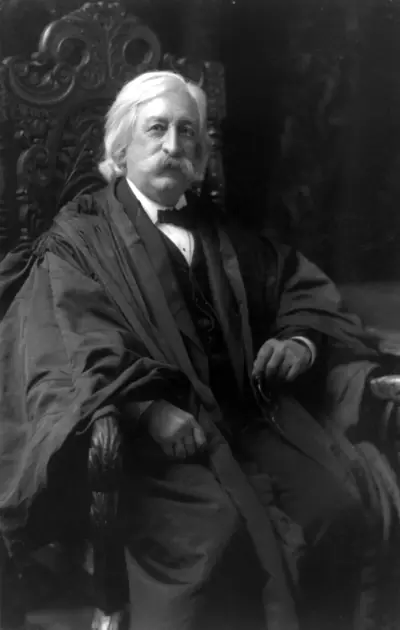
Melville Weston Fuller was an American politician, lawyer, and judge who, from 1888 to 1910, served as the eighth chief justice of the United States.
