William Ellery Channing Quotes
The world is governed much more by opinion than by laws. It is not the judgment of courts, but the moral judgment of individuals and masses of men, which is the wall of defense around property and life.
William Ellery Channing, 1780-1842, Unitarian minister and reformer, Quoted in Josiah Hotchkiss Gilbert, Dictionary of Burning Words of Brilliant Writers, 1895
Sourced by: Eigen's Political and Historical Quotations


See Eddie Bernice Johnson and Otis Singletary for related views

Bradlaugh was an atheist and refused to take his oath on a Bible or swear to God. He offered to make an affirmation. The issue was debated for 6 years and finally resolved in Bradlaugh’s favor. The right to affirm instead of take a religious oath is now settled American and English law.


In America we do not have an official church that can morally speak for the society as a whole. As a result, we often use the law to make a moral statement even if the law is rarely enforced like prostitution. Sometimes we hear the expression, “There ought to be a law” as that is the only way we can express a societal moral value.


For earlier similar sentiments see Plato and William D'Avenant {312586}.


In 1982 the Penn Square bank collapsed, but the public accountant had given it a clean opinion shortly before.
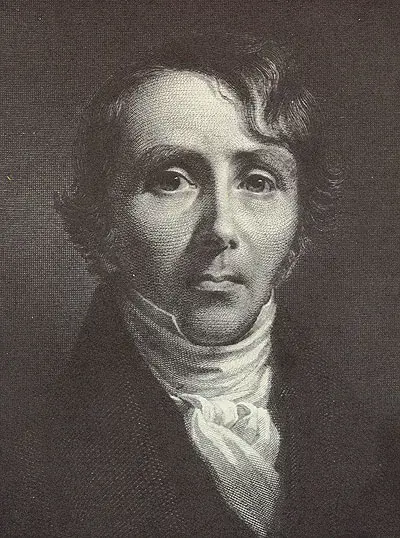
William Ellery Channing was the foremost Unitarian preacher in the United States in the early nineteenth century and, along with Andrews Norton (1786–1853), one of Unitarianism's leading theologians. Channing was known for his articulate and impassioned sermons and public speeches, and as a prominent thinker in the liberal theology of the day. His religion and thought were among the chief influences on the New England Transcendentalists although he never countenanced their views, which he saw as extreme. He espoused, especially in his "Baltimore Sermon" of May 5, 1819, given at the ordination of the theologian and educator Jared Sparks (1789–1866) as the first minister of the newly organized First Independent Church of Baltimore, the principles and tenets of the developing philosophy and theology of Unitarianism, leading to the organization in 1825 of the first Unitarian denomination in America (American Unitarian Association) and the later developments and mergers between Unitarians and Universalists, resulting finally in the Unitarian Universalist Association of America in 1961.
