Mary Boykin Chesnut Quotes
God forgive us, but ours is a monstrous system, a wrong and an iniquity! Like the patriarchs of old, our men live all in one house with their wives and their concubines; and the mulattoes one sees in every family partly resemble the white children. Any lady is ready to tell you who is the father of all the mulatto children in everybody’s household but her own. Those, she seems to think, drop from the clouds.
Mary Boykin Chesnut, 1823-1886, Wife of South Carolina U.S. Senator, Confederate Army General, James Chesnut, Jr., American plantation owner, Diary
Sourced by: Eigen's Political and Historical Quotations

Sexual abuse of female slaves was very common in the American South. See {642027} and {642028}. In the 1930s over 2,300 formerly enslaved African Americans were interviewed by members of the Federal Writers' Project, a New Deal agency in the Works Progress Administration (WPA) during the Great Depression. This particular abuse was one of the most common reported. Ironically, the Southern justification for segregation and prohibition of inter-marriage even through the 1950s, was to prevent the great “crime” of miscegenation which white slave owners and their male friends committed by raping and sexually exploiting the female slaves. Today, as DNA analysis shows, most traditional Southern “white” families have recent Negroes in their ancestry.


This quotation illustrates the Catch 22 dilemma that faces a minority. Black slaves were not allowed to marry and have formal families. After the Civil War racists warned against Blacks who had no respect for marriage monogamy end civil family life. See {619099} But when the slaves were freed and the ex slaves attempted to formalize and solemnize their marriages, they were castigated for that – acting like white people.


Brigham Young, the Mormon Leader and Territorial Governor, was strongly opposed to Interracial sex. See {629150}. An earlier clause provided for loss of the rights to a slave if the master had sexual relations with the slave, something that no Southern State had ever done.

For many years after the Civil War, in an effort to dignify the Southern rebellion, it was fashionable to ignore or skim over the institution of slavery in American history. Government, in particular regarded the issue as divisive even a century after the Emancipation Proclamation.


Johnson had a white mistress who accompanied him visibly at a time when Blacks were lynched for dating white women in many parts of the country. He was criticized heavily by whites for going with a white woman and many Blacks for the same.


Julian, the chemist who developed the industrial process of producing human steroids from soybeans, was the most famous and accomplished African American chemist at the time and the first Black laboratory director in America.


Samuel Langhorne Clemens, 1835-1910


It was indeed the first government that was ever founded on that fallacious principle. In retrospect, it was amazing that more Southerners did not question why no other government in the history of the world based a society on that principle. The Southern hubris was a great failing for them.
When the Union Army had taken Richmond—the Capitol of the Confederacy—the Lieutenant had been invited to dinner at one of the Virginia plantations while slavery was still legal, and slaves served the dinner. The general (but erroneous) belief that Black males were “well hung” as compared with whites tended to make white observers notice the large size Negro penises when they saw them and often to perpetuate that as is the case with this quotation. It seems to be human nature to observe, notice and perpetuate instances of what one believes more often that that which contradicts our beliefs. In actuality Blacks as a groups have an average penis diameter that is very slightly less than whites and an average penis length that is longer than whites—by only one-tenth of an inch. See http://www.penissizes.org/average-penis-size-ethnicity-race-and-country

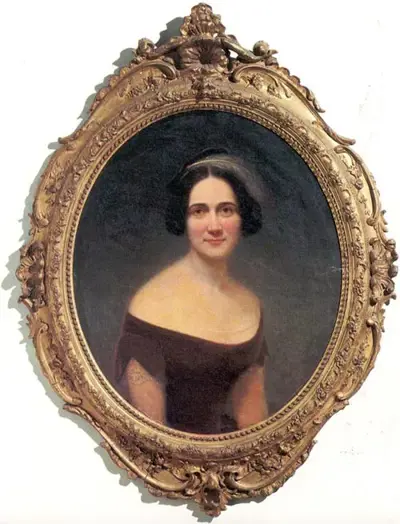
Mary Boykin Chesnut (née Miller) was an American author noted for a book published as her Civil War diary, a "vivid picture of a society in the throes of its life-and-death struggle." She described the war from within her upper-class circles of Southern planter society, but encompassed all classes in her book. She was married to a lawyer who served as a United States senator and Confederate officer. Chesnut worked toward a final form of her book in 1881–1884, based on her extensive diary written during the war years. It was published in 1905, 19 years after her death. New versions were published after her papers were discovered, in 1949 by the novelist Ben Ames Williams, and in 1981 by the historian C. Vann Woodward. His annotated edition of the diary, Mary Chesnut's Civil War (1981), won the Pulitzer Prize for History in 1982. Literary critics have praised Chesnut's diary—the influential writer Edmund Wilson termed it "a work of art" and a "masterpiece" of the genre—and the most important work by a Confederate author.
