Mark Twain Quotes
...on every sin which a colored man commits, the just white man must make a considerable discount, because of the colored man's antecedents. The heirs of slavery cannot with any sort of justice, be required to be as clear and straight and upright as the heirs of ancient freedom. And besides, whenever a colored man commits an unright action, upon his head is the guilt of only about one tenth of it, and upon your heads and mine and the rest of the white race lies fairly and justly the other nine tenths of the guilt.
Samuel Langhorne Clemens, 1835-1910
Mark Twain, Writer, Founder, Anti-Imperialist League, Letter to Karl Gerhardt, May 1, 1883
Sourced by: Eigen's Political and Historical Quotations

Surprising to most people who know of President Theodore Roosevelt’s general liberals, his 4th son was an ultraconservative who founded and joined racist, anti-Semitic, right wing organizations, and to the distress of many in the family and without lent his name to many of the most extreme right wing causes and organizations.


This quotation explains why so many of the Southern poor so actively supported the racist Slavery system even though they could not afford slaves and received no direct benefit from slavery or the discrimination against free Blacks. The poor were not at the bottom of the totem pole, and therefore had a dignity and social status, that the poor in a racially integrated society never possessed.


Christian had just briefed the President about the riots in many cities after the assassination of Martin Luther King. Christian had expressed surprise that the Blacks were so violent.


It was indeed the first government that was ever founded on that fallacious principle. In retrospect, it was amazing that more Southerners did not question why no other government in the history of the world based a society on that principle. The Southern hubris was a great failing for them.
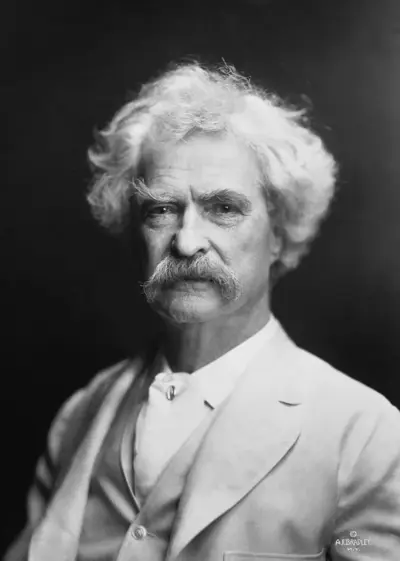
Samuel Langhorne Clemens, known by his pen name Mark Twain, was an American writer, humorist, entrepreneur, publisher, and lecturer. He was lauded as the "greatest humorist the United States has produced," and William Faulkner called him "the father of American literature". His novels include The Adventures of Tom Sawyer (1876) and its sequel, the Adventures of Huckleberry Finn (1884), the latter often called "The Great American Novel".
