David Hume Quotes
Everything in the world is purchased by labor.
David Hume, 1711-1776, Scottish Philosopher & Historian, The philosophical works of David Hume: Including all the essays, and exhibiting the more important alterations and corrections in the successive editions published by the author
Sourced by: Eigen's Political and Historical Quotations


Statements like this caused some to believe him a Marxist, but see his quotation on Karl Marx -- {603061}.


At the time this was generally true for most businesses. However, in a modern economy, there are other ways. Increasing volume, automation, innovating products and services to get premium prices naw are standard techniques.


This used to be a generally accepted principle in America. It took labor to produce wealth. It could be someone else’s labor or even slave labor, but labor produced things or labor enabled us to find minerals like gold or oil. However, in modern capitalism, money itself can produce wealth by investing or yielding interest. Inventions produce wealth as do other ideas. Authors and movie producers produce wealth. Who you know can produce wealth (finder’s fees) as can knowledge.

Ironically, Fitzhugh who detested socialism, held this basic socialist principle. His solution however, was that the profits were necessary for society, and therefore slavery was the solution for Blacks AND whites.

In the interview Bell was interviewed about the protection the Bush administration was giving to the steel industry.


Hoover, a brilliant administrator, seems to have been on the wrong side of most economic issues.

Ingersoll was considered to be the greatest orator and political thinker of his day, but his overt atheistic views curtailed his elected political career.

The factory workers in Lynn, Massachusetts started their own newspaper: This was published four years before Marx and Engles published the Communist Manifesto
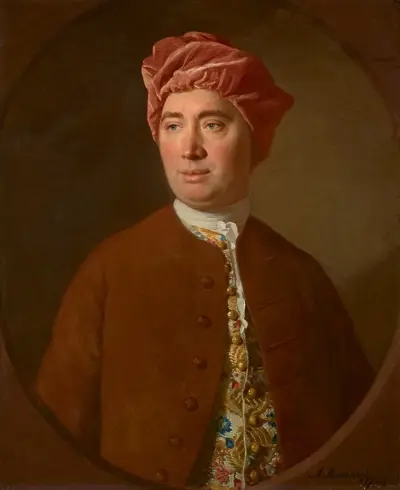
David Hume, Hume strove to create a naturalistic science of man that examined the psychological basis of human nature. Hume argued against the existence of innate ideas, positing that all human knowledge derives solely from experience. This places him with Francis Bacon, Thomas Hobbes, John Locke, and George Berkeley as a British Empiricist.
