Daniel Bell Quotes
Fundamentally, where you have an industry in which labor is the primary cost, we can’t compete and probably shouldn’t.
In the interview Bell was interviewed about the protection the Bush administration was giving to the steel industry.
Daniel Bell, 1919–2011, Sociologist Interview, 2002, Quoted in New York Times, March 10, 2002
Sourced by: Eigen's Political and Historical Quotations


At the time Vidal, who shared this view with many economists, had no inkling of the digital revolution that the PC and Internet would bring, nor the other phenomena that eliminated the need for cheap labor — robotics and offshoring. Nor could he have foreseen the development of fracking making America virtually energy independent as it was before WWII. It appears that the problem has shifted from Vidal's issues, to that of what do we do with the American citizens who do not have advanced skills nor do we have methods of educating them and training them to this level. The quotation illustrates that it is always difficult predicting the future, but particularly hazardous when it comes to economics.


Hoover, a brilliant administrator, seems to have been on the wrong side of most economic issues.


One hundred years later, many in America would come to this same conclusion and American manufacturing, to outcompete China and other Oriental cultures, have turned to highly complex, constantly innovative, and technically advanced processes.


Fallows was contrasting the benefit that offshore manufacturing brought many Americans in addition to the damage to the Americans who lost their jobs to Chinese manufacturing workers. The complexity was that the offshoring of manufacturing does damage to many American blue collar but benefits white collar workers.

At the time this was generally true for most businesses. However, in a modern economy, there are other ways. Increasing volume, automation, innovating products and services to get premium prices naw are standard techniques.


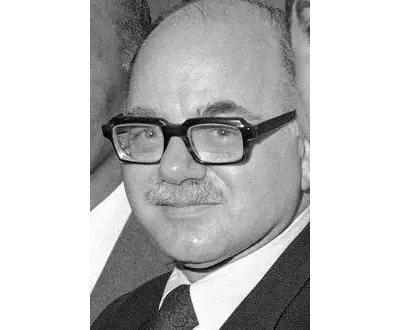
Daniel Bell was an American sociologist, writer, editor, and professor at Harvard University, best known for his contributions to the study of post-industrialism. He has been described as "one of the leading American intellectuals of the postwar era". His three best known works are The End of Ideology, The Coming of Post-Industrial Society, and The Cultural Contradictions of Capitalism.
