William Lyon Mackenzie Quotes
Labor is the only means of creating wealth.
William Lyon MacKenzie, 1795-1861, Canadian Member of Parliament, Constitution for the State of Upper Canada, 1837
Sourced by: Eigen's Political and Historical Quotations


Ironically, Fitzhugh who detested socialism, held this basic socialist principle. His solution however, was that the profits were necessary for society, and therefore slavery was the solution for Blacks AND whites.

The implication of the investment in infrastructure and education is that the state must tax people at a rate that would pay for it. But if the rate is too high, he argues, people will not make a sufficient profit from their work.


Statements like this caused some to believe him a Marxist, but see his quotation on Karl Marx -- {603061}.


At the time very few industrialists appreciated the value of particular workers and tended to think of them as interchangeable parts.

This is a classic illustration of a quotation illustrating the problem that political discussions have with the issue of causality. Conrad is absolutely correct in stating that investment and innovation as the direct cause for most productivity. However, without the demand created by consumption (or the prospect of it) there will be little capital and effort at innovation. There is a causal chain and different ideological proponents argue for their preferred link in the chain tending to ignore the other links. Many liberals tout increasing consumption and pay little attention to the investment and innovation—an error of the opposite of Conrad’s.


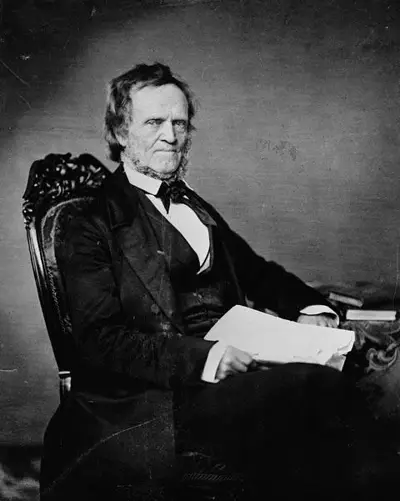
William Lyon Mackenzie was a Scottish-born Canadian-American journalist and politician. He grew up in Dundee, Scotland, and emigrated to York, Upper Canada, (later known as Toronto) in 1820. He published his first newspaper in 1824 called Colonial Advocate and wrote articles that supported the policy proposals of the Upper Canadian political Reform movement. In 1827 he was elected as a York County representative to the Legislative Assembly of Upper Canada. He investigated corruption by Tory politicians (who were the political opponents of the Reform movement) and other elite members of Upper Canada, which he called the Family Compact. He brought grievances from Upper Canada citizens to the Colonial Office in London, England, causing the colonial secretary to propose reforms in the colony. In 1834, York became the city of Toronto and Mackenzie was elected by the city council to be its first mayor, but he was not reelected the following year.
