John Locke Quotes
It is labour, then, which puts the greatest part of value upon land, without which it would scarcely be worth anything
John Locke, 1632-1704, English Political Philosopher, Second Treatise on Government, 1690
Sourced by: Eigen's Political and Historical Quotations


Paine, one of America’s founding fathers and the man most responsible for influencing Americans to revolt, is generally not given much attention in modern times. One of the main reasons was that his philosophy regarding land and land ownership is today considered socialist if not communist. Paine’s other views are mostly Apple pie American, but this is shocking to many Americans.

While Turgot was right about so much, this was one of his big errors—the assumption that land was fundamental to and necessary for, wealth. In many countries it is still true, but of the recent billionaires like Warren Buffet, Bill Gates, Carlos Slim and most others, they own very little land. In the United States and Canada, there are large tracts of land that few or no one will buy and a cast majority of people do not make their living from land.


This philosophical point of view is at odds with that of many Native Americans.


While Peres and many others think that the Arab nations can become developed countries, there are major barriers in the way. One is oil. No country that has had a great deal of oil has ever developed. Then there is education. Israel’s technological success requires a very high level of education in secular subjects which no Arab nation provides. The Western cultural values of inquiry, freedom of thought, individuality are were in large part developed from the traditional Jewish values. The Muslims had these at the early 2nd millineum. But political and religious forces since then, have created contemporary Arab cultures whose vaues are in many ways antithetical to modern technological development.

The word “proprietor” at the time meant someone who had title to land. The title was then almost always tied up with the aristocratic titles. “Great proprietors” were therefore nobles who owned and controlled large land holdings. The “improvers” tended to be the businessmen—especially the manufacturers and the transportation magnates. Large landowners could just make money by renting parts of their land to tenant farmers. They needed no capital, no vision, not much skill or talent, and they didn’t have to take any risks.


Abd al-Rahman Ibn Mohammad. He is generally regarded to be the World’s first social scientist. The largest statue in Tunisia of not of a military leader of king, but of this social scientist.


After Nixon was elected, he never did very much to make Black Capitalism come to pass, but he did make the concept a more respectable idea and it has grown slowly since.

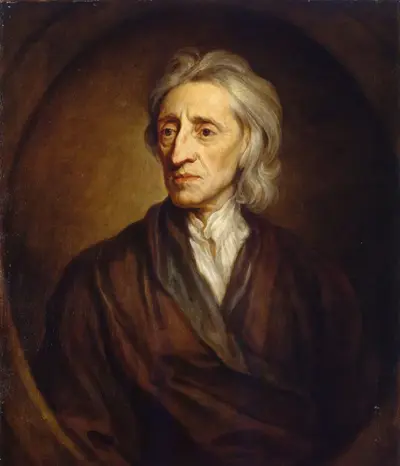
John Locke FRS was an English philosopher and physician, widely regarded as one of the most influential of Enlightenment thinkers and commonly known as the "Father of Liberalism". Considered one of the first of the British empiricists, following the tradition of Sir Francis Bacon, Locke is equally important to social contract theory. His work greatly affected the development of epistemology and political philosophy. His writings influenced Voltaire and Jean-Jacques Rousseau, and many Scottish Enlightenment thinkers, as well as the American Revolutionaries. His contributions to classical republicanism and liberal theory are reflected in the United States Declaration of Independence.
