F. Lee Bailey Quotes
Can any of you seriously say the Bill of Rights could get through Congress today? It wouldn’t even get out of committee.
F. Lee Bailey, Attorney, Quoted in Newsweek, April 17, 1967
Sourced by: Eigen's Political and Historical Quotations

Jefferson and many others thought the original drafting of the Constitution was deficient in not explicitly protecting rights from the government. See {586024}. When it came time for ratification, it was clear that ratification would not take place unless that was remedied and the Bill of Rights made the ratification possible by satisfying many critics of whom Jefferson was but one. Note that the protection sought was from the President and the Congress.
Note the use of the phrase “against the government.” One of the unique aspects of the American Constitution and The Bill of Rights is that the government is considered a potential and even probable infringer on the liberties of the people. It is almost as though the government was the potential enemy. Modern libertarians state this very explicitly and it is ever present in the views of both the right and left wings of American politics. Most centrists recoil at the thought that some citizens see the government as the enemy, but even in America there have been times where the government has infringed on the rights of citizens only to have the courts or future administrations and Congresses correct the error.

This is probably the first known use of the Bill of Rights phrase in the English language. For the earliest American use, see Edward Rutledge.

This statement was made After the Senate straw-voted 58-42 in favor of a constitutional amendment against flag burning, less than the two-thirds required by the Constitution.


Two years after 9-11 the George W. Bush administration was pushing the envelope on due process, ethnic profiling and other civil rights issues. Clinton wanted to be helpful so he chastised those civil libertarians who were totally fixated on civil rights to the exclusion of almost all else.

What was to become the 14th Amendment was being discussed. Several of the most radical Republicans drafted language that would allow Congress to make any law regarding life, liberty or property, so that they could be sure that the States would not make their laws in a discriminatory manner. However, Hotchkiss and the majority wanted to be sure the laws were not discriminatory but they didn’t want Congress to have the power to make any law regarding life, liberty and property for every state. The current version of the 14th Amendment just prohibited discrimination in laws, not empowering the Federal Government to override the state governments in most important areas.

Hamilton acknowledged that the major public objection to the new U. S. Constitution was its lack of a Bill of Rights, which Hamilton argued was unnecessary.

It is ironic that Pakistan, the creation of Jinnah’s efforts, has to a great extent adopted Sharia (Islamic Law) resulting in severe curtailment of freedom of speech and thought. Professors languish in jail for not teaching the history of Muhammed in the orthodox way, people are sentenced to death for what the local mullahs regard as blasphemy—results which from Jinnah’s point of view were terrible.


Johnson, fundamentally an inveterate racist, tried to kill all attempts at protecting Negro rights after the Civil War. Congress rewrote the Bill to obtain enough signatures and then passed it over the President’s Veto later in the year.


See George Mason for the contrary view. {606646}

Arguing for a Bill of Rights to assuage public objections to the original Constitution:
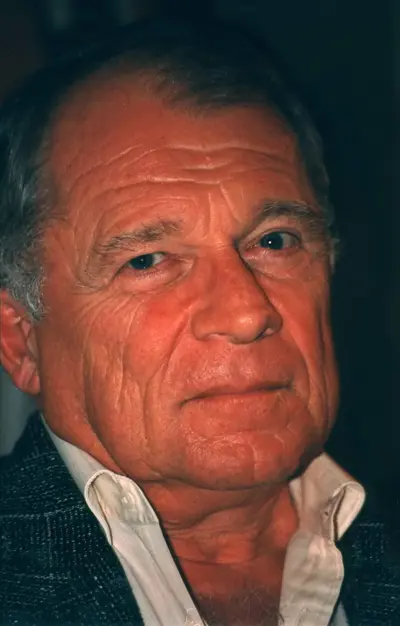
Francis Lee Bailey Jr. is a former American criminal defense attorney best known for representing - and helping to acquit - physician Sam Sheppard and former football player O.J. Simpson, both of whom allegedly murdered their spouses.
