George Mason Quotes
A Bill of Rights would give great quiet to the people.
Arguing for a Bill of Rights to assuage public objections to the original Constitution:
George Mason, 1725-1792, Member, Virginia & Federal Constitutional Conventions, 1787
Sourced by: Eigen's Political and Historical Quotations

Note the use of the phrase “against the government.” One of the unique aspects of the American Constitution and The Bill of Rights is that the government is considered a potential and even probable infringer on the liberties of the people. It is almost as though the government was the potential enemy. Modern libertarians state this very explicitly and it is ever present in the views of both the right and left wings of American politics. Most centrists recoil at the thought that some citizens see the government as the enemy, but even in America there have been times where the government has infringed on the rights of citizens only to have the courts or future administrations and Congresses correct the error.

There is no declaration of rights … the declaration of rights in the separate states are no security
See Rufus King for the opposite position. {610244}

Many New Yorkers and others felt that since the attack on the World Trade Center was made in the name of Islam, the mosque and commuity center should be built in another location further from Ground Zero. Ellison was debating someone who argued that the Mosque should not be built so that sensitivity can be shown for those New Yorkers who lost relatives and friends in the attack of September 11. Rather than insist on their Constitutional rights, the Muslim leadership of the project, moved the location somewhat further away from Ground Zero.

This is probably the first known use of the Bill of Rights phrase in the English language. For the earliest American use, see Edward Rutledge.

There are some who believe that in a time of national emergency the government has the right to suspend the bill of rights or any other constitutional provision. This view is typically held by most foreign governments and they do this all the time. However in America, there is a general consensus that emergency does not vitiate the constitution. However even President Abraham Lincoln tried to suspend aspects of the Bill of Rights during a national crisis.


It was a quasi constitution in limited areas and declared the representatives of the people coordinate with the governor and council, and that no taxes could be laid without their consent—a degree of freedom and self-determinism what was far greater than those of the other colonies save Pennsylvania. Several years earlier, the English portion of the colony clamored for representative government and was ready to break into open rebellion against Governor Edmund Andros and the authority of the Duke of York. The Duke promised an elected assembly and 18 elected New Yorkers constituted the first representative assembly. Their first act was to pass the Charter of Liberties which was approved by the Duke’s new Governor Thomas Dongan. So the Charter of Liberties was the first set of laws in America passed by a vote of elected representatives of the people.


See George Mason for the contrary view. {606646}

Hamilton acknowledged that the major public objection to the new U. S. Constitution was its lack of a Bill of Rights, which Hamilton argued was unnecessary.


Jefferson and many others thought the original drafting of the Constitution was deficient in not explicitly protecting rights from the government. See {586024}. When it came time for ratification, it was clear that ratification would not take place unless that was remedied and the Bill of Rights made the ratification possible by satisfying many critics of whom Jefferson was but one. Note that the protection sought was from the President and the Congress.


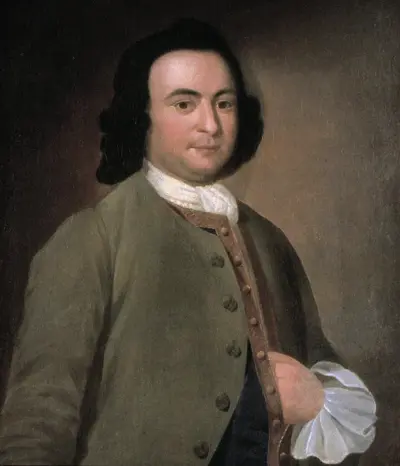
George Mason IV was an American planter, politician and delegate to the U.S. Constitutional Convention of 1787, one of three delegates who refused to sign the Constitution. His writings, including substantial portions of the Fairfax Resolves of 1774, the Virginia Declaration of Rights of 1776, and his Objections to this Constitution of Government (1787) opposing ratification, have exercised a significant influence on American political thought and events. The Virginia Declaration of Rights, which Mason principally authored, served as a basis for the United States Bill of Rights, a document of which he has been deemed a father.
