Martin Luther Quotes
Anyone who can be proved to be a seditious person is an outlaw before God and the emperor; and whoever is the first to put him to death does right and well. Therefore let everyone who can, smite, slay and stab, secretly or openly, remembering that nothing can be more poisonous, hurtful, or devilish than a rebel.
Luther, Martin. "Against the Robbing and Murdering Hordes of Peasants, 1525." Luther's Works, Vol. 46: Christian in Society III, edited by Robert C. Schultz, Fortress Press, 1967, p. 50.


government appointed officials and bureaucrats Savonarola was a very hated ruler, opposed to any kind of a Parliament or assembly. And the penalty for advocating for a Parliament was severe. The Signoria were the various government appointees and clerks. They were influential in Florence and hence they were silenced by the mot draconian methods. There was a movement throughout Italy for parliaments and less arbitrary government. Savonarola was particularly strict in his rooting out sin and cruel in his punishments and hence very unpopular. He was also under the delusion that God himself had called on him to preach his strict version of morality. Some of the Nobles reached the Pope with many of Savonarola’s extreme statements and Savonarola was excommunicated and burned as a heretic. His executioner gloated that he was burning Savonarola before the powerful priest could burn him as he had done so many others.

This was his name for the wealthy slaveowners in Tennessee. He was the military governor of Tennessee when he so labeled the secessionists.


Most sophisticated Muslim theologians would not agree at all with the “permission” he quotes from the Koran. However, there is no hierarchy of belief in Islam and there are tens of thousands of Muslim imams and millions of individual Muslims who believe and teach just what this particular terrorist stated.

Charles I had caused the death of his subjects with impunity and was called to account. However, the English Parliament did not know what specific crime the King had committed. Kings had executed people, guilty of crimes and otherwise, for centuries. For what could a king be accountable. Cooke developed the crime of Tyranny and drew up and presented the indictment for that. The King was found guilty and executed. This was the first time in legal history that a ruler was called to account for crimes committed against his own people. It became the foundation for many trials thereafter including that of Saddam Hussein in 2006.


South Carolina passed a state law which overrode and nullified Federal Laws that they did not like. It was a type of secession. President Jackson, in his own blunt style, let them know that they had better not try to implement their nullification law. Of all the Presidents in American History, Jackson had the least respect for Constitutionality and due process. He had a history of summary execution where he was the judge, jury and almost the personal executioner. He is the only president in American history who refused to obey and order of the Supreme Court. There were few who doubted that he would make good on his threat. The South Carolina convention reconvened and repealed its Nullification Ordinance on March 11, 1833.

The revolution turned on many of its initiators including Vergniaud. He was guillotined along with other Girondists.

With martial law came the authority to seize ALL guns in the colony for the emergency. This was not to disarm the general populace. It reflected the fact that there were relatively few colonists who owned guns as they were very expensive. The Governor could take those that existed and use them to defend against the rebels or whatever. There were more gun owners in the Revolution but still a minority. Even after the War of 1812 only 30% of Americans were armed, and that shortly decreased to 10% as there was no real culture of gun ownership in early America. This would come around the Civil War.


The Roman Catholic Defender Organization had about 300 thousand volunteers, and Belfast was the central location of the Defender leaders.


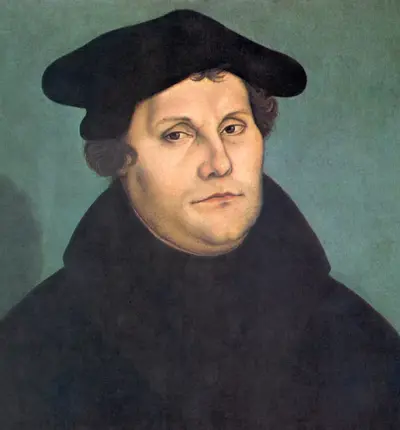
Martin Luther, O.S.A. was a German professor of theology, priest, author, composer, Augustinian monk, and a seminal figure in the Reformation. Luther was ordained to the priesthood in 1507. He came to reject several teachings and practices of the Roman Catholic Church; in particular, he disputed the view on indulgences. Luther proposed an academic discussion of the practice and efficacy of indulgences in his Ninety-five Theses of 1517. His refusal to renounce all of his writings at the demand of Pope Leo X in 1520 and the Holy Roman Emperor Charles V at the Diet of Worms in 1521 resulted in his excommunication by the pope and condemnation as an outlaw by the Holy Roman Emperor.
