Rhode Island Quotes
An Act To Prevent Outrages Against The Indians
Most of the Colonies had laws against Indians possessing guns and any white seeing such was allowed to attack such Indians. Rhode Island had peaceful relations with the Indians and not only allowed Indians to carry firearms for hunting but hired them to do the hunting as they were better at it and did not value their time as highly as the whites. However, travelers coming from out of the colony would see an Indian with a gun, and shoot at him thereby killing or injuring friendly Indians and causing racial problems when there were few. The quotation also illustrates that there was little uniformity amongst the colonies as to how to deal with their various social and political problems.
Rhode Island, Title of Law, 1681
Sourced by: Eigen's Political and Historical Quotations


In the only presidential Special Message to Congress on the subject of Indians in American history:


This law allowed the President to forcibly move entire tribes from their native lands to sparsely settled land in the West. Oklahoma became knows as Indian Territory as so many Indians were relocated there. The act, and this clause in particular, gave the President the authority over all Indian tribes in the nation and established the difficult if not impossible relationship between the Indian nations and the Federal government. The act—the last sentence of the quote—also ratified all treaties with the Indians and pronounced them inviolate. That was not to be.


The Cherokee's had fallen under the control of the Confederate military and Ross had urged Federal military protection for the tribe.


He had done an analysis of American History textbooks and found that 9 pages about American Indians and their history before and after Europeans came to America. He and most other historians consider that to be inadequate.

Violating these Iroquois “environmental regulations” were not mere technicalities but were enforced by war if necessary. The Iroquois were very sophisticated diplomatically and had appointed Garangula, a chief of one of the Iroquois tribes, to be their Ambassador Plenipotentiary in negotiations with the French.


He was a brutal officer who by modern standards committed various war crimes.


There was then legislation proposed to to nullify a number of Indian treaties. Indians themselves were divided as to the desirability. Mrs. Roosevelt favored negotiations and discussions with each tribe separately regarding their treaties as opposed to the proposed legislation which treated the tribes monolithically when indeed they were 500 separate tribes with different cultures, needs and desires.
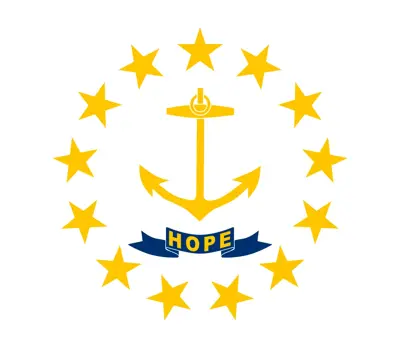
Rhode Island (/ˌroʊd -/ (listen), like road), officially the State of Rhode Island, is a state in the New England region of the United States. It is the smallest U.S. state by area and the seventh-least populous (1,059,361 as of 2019), but it is also the second-most densely populated behind New Jersey. The state takes its name from Rhode Island; however, most of the state is located on the mainland. The state has land borders with Connecticut to the west, Massachusetts to the north and east, and the Atlantic Ocean to the south via Rhode Island Sound and Block Island Sound. It also shares a small maritime border with New York. Providence is the state capital and most populous city in Rhode Island.
