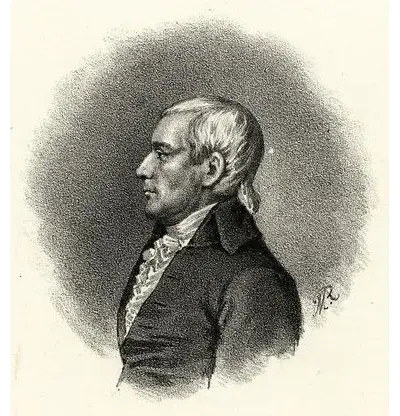
James Kinsey Quotes
They [Indians] have so long been recognized as slaves in our law, that it would be as great a violation of the rights of property to establish a contrary doctrine at the present day, as it would in the case of Africans, and as useless to investigate the manner in which they originally lost their freedom.
James Kinsey, 1731-1803, Chief Justice of the New Jersey Supreme Court, Member of the Continental Congress (NJ), The State vs. Wagoner, 1797
Sourced by: Eigen's Political and Historical Quotations

This decree is an example of the Catholic Church’s official response to the advent of slavery in the New World. Slavery here should be distinguished from what the Catholic Church called “just title” slavery, which approved of the practice in circumstances in which the person was deprived of their liberty justly. Specific examples have included slaves captured in war, persons condemned to slavery for a crime, and those who sold themselves into slavery. For an example of a type of “just title” slavery being legitimatized, see Nicholas V {612174}. The practice of enslaving entire ethnic groups like South American natives was, however, “never before heard of” and was immediately condemned. In many cases the line between slavery for no morally justifiable reason, i.e. racial slavery, and “just title” slavery remained unclear to Catholic laity and clergy alike.


John Sutter was an immigrant to California from Switzerland where he became a Mexican citizen. Slavery was outlawed in Mexico and its territories, yet Sutter and others maintained Indians as slaves. The Roman Catholic Missions of California also kept Indian slaves. This quotation is historically important because many people never realized that slavery was prevalent in California.


Baldwin was a young lawyer at the time. He represented a shipload of ex-slaves who had taken over their Spanish slave ship and landed in America. The Spanish claimed, the ship owners and some of the crew all claimed the “property.”


Many of the Americans captured by the Islamic Barbary pirates in the years leading up to the Barbary War were sold into slavery. Eaton, who was the American consul at Tunis, couldn’t help but notice the tragic parallel between the suffering of those captured by the pirates and slaves in the American South.

Most of the Colonies had laws against Indians possessing guns and any white seeing such was allowed to attack such Indians. Rhode Island had peaceful relations with the Indians and not only allowed Indians to carry firearms for hunting but hired them to do the hunting as they were better at it and did not value their time as highly as the whites. However, travelers coming from out of the colony would see an Indian with a gun, and shoot at him thereby killing or injuring friendly Indians and causing racial problems when there were few. The quotation also illustrates that there was little uniformity amongst the colonies as to how to deal with their various social and political problems.

Baron Brougham and Vaux

Fitzhugh was a Southern iconoclast whose view of Northern labor was much like that of Karl Marx but who was an enthusiastic supporter of slavery. Fitzhugh was of the opinion that slavery would be reinstated in the North and his treatise agues for that. More and more intellectual opinion was coming to the conclusion that slavery must be abolished or made universal before Lincoln’s famous statement in his debate against Douglas. Although Northerners and Southerners had come to agree on this point, they disagreed about which alternative would and should prevail.