Standing Bear Quotes
Indians should teach Indians; … Indians should serve Indians, especially on reservations.
Standing Bear, 1868-1937, Oglala Sioux Indian Chief, Land of the Spotted Eagle
Sourced by: Eigen's Political and Historical Quotations

In the only presidential Special Message to Congress on the subject of Indians in American history:

Most of the Colonies had laws against Indians possessing guns and any white seeing such was allowed to attack such Indians. Rhode Island had peaceful relations with the Indians and not only allowed Indians to carry firearms for hunting but hired them to do the hunting as they were better at it and did not value their time as highly as the whites. However, travelers coming from out of the colony would see an Indian with a gun, and shoot at him thereby killing or injuring friendly Indians and causing racial problems when there were few. The quotation also illustrates that there was little uniformity amongst the colonies as to how to deal with their various social and political problems.


The meeting included several Indians, President Grant, and the Secretary of the Interior and the Director of the Bureau of Indian Affairs. The Indians had been offered $25,000 and land in the Oklahoma Indian Territory in exchange for moving from their traditional lands.


While Jefferson was clear on this point, there were other forces and points of view that did not recognize Indian rights and were prepared to use force to obtain Indian lands. These, together with some Indians who made bad and sometimes corrupt bargains and treaties ceding land, produced the loss of most of the Indian land in America.

This law allowed the President to forcibly move entire tribes from their native lands to sparsely settled land in the West. Oklahoma became knows as Indian Territory as so many Indians were relocated there. The act, and this clause in particular, gave the President the authority over all Indian tribes in the nation and established the difficult if not impossible relationship between the Indian nations and the Federal government. The act—the last sentence of the quote—also ratified all treaties with the Indians and pronounced them inviolate. That was not to be.


His negative predictions were tragically prescient.


McKinley was then Secretary of War and Taft was Chairman of the Commission on the Philippines.

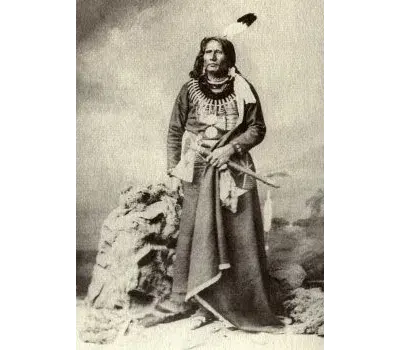
Standing Bear (c. 1829–1908) (Ponca official orthography: Maⁿchú-Naⁿzhíⁿ/Macunajin; other spellings: Ma-chú-nu-zhe, Ma-chú-na-zhe or Mantcunanjin pronounced [mãtʃuꜜnãʒĩꜜ]) was a Ponca chief and Native American civil rights leader who successfully argued in U.S. District Court in 1879 in Omaha that Native Americans are "persons within the meaning of the law" and have the right of habeas corpus, thus becoming the first Native American judicially granted civil rights under American law. His first wife Zazette Primeau (Primo), daughter of Lone Chief (also known as Antoine Primeau), mother of Prairie Flower and Bear Shield, was also a signatory on the 1879 writ that initiated the famous court case.
