Ben Nighthorse Campbell Quotes
I don't think the approach is to simply give them [the Indian tribes] money, because too much money has disappeared in Indian country, too much has been mismanaged. The history of Indian country is the disappearance of money.
Ben Nighthorse Campbell, U.S. Congressman & Senator (Democrat, CO), Quoted in Governing the States and Localities, April 1988
Sourced by: Eigen's Political and Historical Quotations


Marshall was in general very sympathetic with the Indians and their rights, but even for him the notion of treating the Indians as sovereign masters of all their lands was unthinkable.


In the only presidential Special Message to Congress on the subject of Indians in American history:


While Jefferson was clear on this point, there were other forces and points of view that did not recognize Indian rights and were prepared to use force to obtain Indian lands. These, together with some Indians who made bad and sometimes corrupt bargains and treaties ceding land, produced the loss of most of the Indian land in America.

This law allowed the President to forcibly move entire tribes from their native lands to sparsely settled land in the West. Oklahoma became knows as Indian Territory as so many Indians were relocated there. The act, and this clause in particular, gave the President the authority over all Indian tribes in the nation and established the difficult if not impossible relationship between the Indian nations and the Federal government. The act—the last sentence of the quote—also ratified all treaties with the Indians and pronounced them inviolate. That was not to be.


Justification for policy of settling all Indians west of the Mississippi River.

There was then legislation proposed to to nullify a number of Indian treaties. Indians themselves were divided as to the desirability. Mrs. Roosevelt favored negotiations and discussions with each tribe separately regarding their treaties as opposed to the proposed legislation which treated the tribes monolithically when indeed they were 500 separate tribes with different cultures, needs and desires.

The intentions of the Founding Fathers towards the Indians was decent, respectful, and well intentioned. However, there was not enough of a system of enforcement or the will to enforce when the greed of the average whites grew too great. Many settlers saw these vast lands and could not see any harm in using a few acres for their farm. And if there had been only a few, there would have been little trouble. However, the settlers kept coming and coming and soon the Indians began to push back. In a sense, it was a class problem. The members of the Continental Congress who wrote the Northwest Ordinance were educated, affluent men who had plenty of land. Most of the men who contested for the Indian lands had little land or were newly affluent and saw few limits to America.


Cass was negotiating with the Shawnees and Cherokees to persuade them to move to land west of the Mississippi. See John Henry Eaton for similar unkept promises.


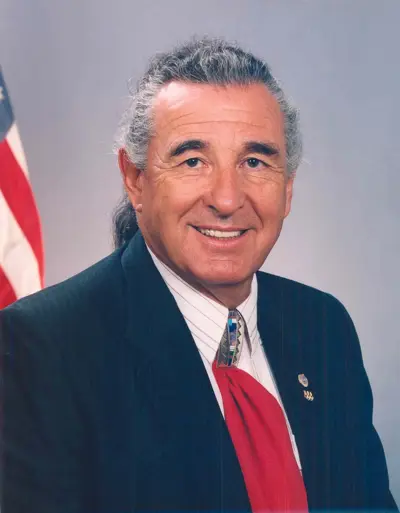
Ben Nighthorse Campbell is an American Cheyenne politician who served as a U.S. Representative from 1987 to 1993, and a U.S. Senator from Colorado from 1993 to 2005. He serves as one of forty-four members of the Council of Chiefs of the Northern Cheyenne Indian Tribe. During his time in office, he was the only Native American serving in the U.S. Congress. As of 2021, he is the last Native American elected to the U.S. Senate.
