Harry S. Truman Quotes
All of you, I am sure, have heard many cries about Government interference with business and about "creeping socialism." I should like to remind the gentlemen who make these complaints that if events had been allowed to continue as they were going prior to March 4, 1933, most of them would have no businesses left for the Government or for anyone else to interfere with — and almost surely we would have socialism in this country, real socialism.
March 4, 1933 was the date that Franklin Delano Roosevelt had assumed the Presidency from Herbert Hoover and used government to combat the Great Depression whereas Hoover would not take any of these steps as the conservative wing of his party and he regarded anything that government did was “creeping socialism”. Historically, it is useful to recall what steps Roosevelt took that were described as socialism. These include Social Security, Federal Deposit Insurance for bank accounts, aid to farmers, the Civilian Conservation Corps, Regulation of the stock market, regulation of banks and many other things that are key elements of modern capitalism which virtually every capitalistic nations has in one form or another. Long after Truman was out of office, the most conservative elements of the Republican Party have accused every Democratic President of “creeping socialism” when they were actually quite opposed to socialism. Even when their career before their presidency was full of criticisms of socialism and policies that are opposite, as in the case of President Obama, the President has been accused of being a socialist. However, it started with Franklin Delano Roosevelt and Harry S Truman.
Harry S Truman, 1884-1972, 33rd President of the United States (Democrat, MO), Address to the Democratic National Convention, July 15, 1948
Sourced by: Eigen's Political and Historical Quotations


This rigid view left no room for regulation which is what almost every modern industrial democracy has chosen. To some of his extremist followers, any government regulation of business or the economy whatsoever, regardless of how little, means that the nation has embraced socialism. It is in this sense that many extreme right wingers viewed Presidents like Franklin Delano Roosevelt, Harry Truman, John Kennedy, Bill Clinton, and Barack Obama as socialists while they saw themselves as opponents of socialism.


Reference to the British Economist John Maynard Keynes who advocated government action to manage the economy.
Mises defines government revenue in such a manner that it always relly belonged to individuals, therefore when government invests in enterprises that accumulate capital via profits, Mises does not consider it capital accumulation. One counterexample of this point is the George Washington Bridge in New York, built in Mises lifetime by Robert Moses of the New York Port Authority. The tolls on the bridge paid off the bondholders who financed much of the initial construction. But then capital started to accumulate at such a rapid rate that Moses was able to build other capital projects ranging from highways to the World Trade Center Buildings with capital constantly accumulated. The New York Port Authority under Moses generated more capital appreciation than any corporation that had been in existence at that point. And he could not even sell stock. However, the Port Authority and a few others were exceptions. Generally government did was unable to accumulate capital in its enterprises.


Most classic socialists would not agree, but Deng’s approach created the most economically successful socialist economy in history.


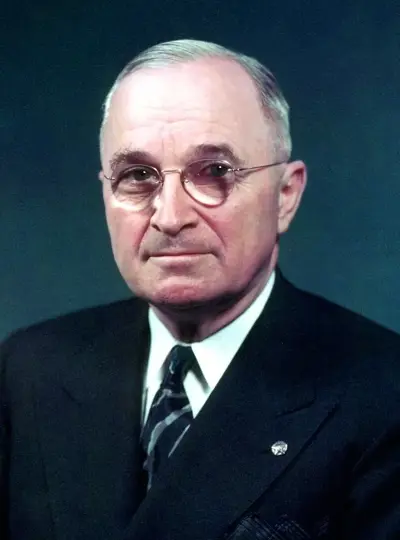
Harry S. Truman was an American politician who served as the 33rd President of the United States (1945–53). He served as a United States Senator from Missouri (1935–45) and briefly as Vice President (1945) before he succeeded to the presidency on April 12, 1945 upon the death of Franklin D. Roosevelt. He was president during the final months of World War II, and approved the plan to drop atomic bombs on Hiroshima and Nagasaki. Truman was elected in his own right in 1948. He presided over an uncertain domestic scene as America sought its path after the war and tensions with the Soviet Union increased, marking the start of the Cold War.
