Steven Rattner Quotes
Conservatives brayed that government should stay out of the private sector; liberals bleated for nationalizing the banks.
Rattner, Steven. Overhaul: An Insider's Account of the Obama Administration's Emergency Rescue of the Auto Industry. Houghton Mifflin Harcourt, 2010.


The first part of this quotation has defined the attitude of most Americans towards private enterprise and government since then. The second part of the quotation—the undesirability of public ownership of railroads has given way to the modern problem that no passenger railroad can be operated profitably by anyone—private or public. So Roosevelt’s “far-reaching disaster” was finally complete with the Federal Government taking over responsibility for Amtrack.


March 4, 1933 was the date that Franklin Delano Roosevelt had assumed the Presidency from Herbert Hoover and used government to combat the Great Depression whereas Hoover would not take any of these steps as the conservative wing of his party and he regarded anything that government did was “creeping socialism”. Historically, it is useful to recall what steps Roosevelt took that were described as socialism. These include Social Security, Federal Deposit Insurance for bank accounts, aid to farmers, the Civilian Conservation Corps, Regulation of the stock market, regulation of banks and many other things that are key elements of modern capitalism which virtually every capitalistic nations has in one form or another. Long after Truman was out of office, the most conservative elements of the Republican Party have accused every Democratic President of “creeping socialism” when they were actually quite opposed to socialism. Even when their career before their presidency was full of criticisms of socialism and policies that are opposite, as in the case of President Obama, the President has been accused of being a socialist. However, it started with Franklin Delano Roosevelt and Harry S Truman.

This rigid view left no room for regulation which is what almost every modern industrial democracy has chosen. To some of his extremist followers, any government regulation of business or the economy whatsoever, regardless of how little, means that the nation has embraced socialism. It is in this sense that many extreme right wingers viewed Presidents like Franklin Delano Roosevelt, Harry Truman, John Kennedy, Bill Clinton, and Barack Obama as socialists while they saw themselves as opponents of socialism.


1st Viscount Snowden. Nationalization is when a nation or state determines that certain industries of areas of the economy should be reserved for the government to operate. Private companies, if they have been operating a nationalized industry losse their rights to continue in that business and may even lose their physica assets in which case th form is supposed to be paid a fair price. In 21st century America we have very few nationalized industries. One of these is the manufacture of nuclear weapons. Communist counties have many if not most of the economy nationalized. From the 19th century socialism has evolved from a belief that most people will best be served by nationalization of most of th major economic functions. However, over time this did not meet Socialism’s other objectives and nationalism became less popular with socialists. Snowden, a leading socialist, wanted to get rid of the concept entirely, and today there are very few situations where there are calls for nationalis. Even the few remaining communist nations are privatizing (the opposite of nationalizing) some of their economy.


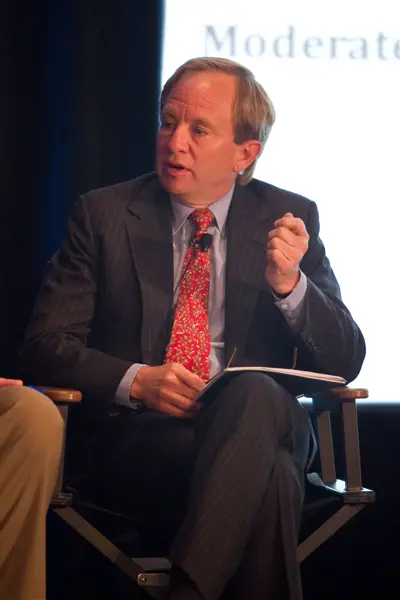
Steven Lawrence Rattner is a New York investment asset manager who served as lead adviser to the Presidential Task Force on the Auto Industry in 2009. He is currently chairman and chief executive officer of Willett Advisors LLC, the private investment group that manages billionaire former New York mayor Michael Bloomberg's personal and philanthropic assets. He continues to be involved in public policy matters as the economic analyst for MSNBC's Morning Joe, and as a contributing opinion writer for The New York Times op-ed page.
