Harry Hopkins Quotes
The new frontier is idle men, money and machines, and all the resourcefulness, ingenuity and courage that reside in twelve or thirteen million unemployed men is helpless to take up this new frontier without tremendous organization of productive forces such as only government can supply when business is in the doldrums.
Harry Hopkins, 1890-1946, U. S. Secretary of Commerce (Democrat), Director, Works Progress Administration, Director, Federal Emergency Relief Administration, Special Assistant to the President, Quoted in Time, July 18, 1938
Sourced by: Eigen's Political and Historical Quotations


March 4, 1933 was the date that Franklin Delano Roosevelt had assumed the Presidency from Herbert Hoover and used government to combat the Great Depression whereas Hoover would not take any of these steps as the conservative wing of his party and he regarded anything that government did was “creeping socialism”. Historically, it is useful to recall what steps Roosevelt took that were described as socialism. These include Social Security, Federal Deposit Insurance for bank accounts, aid to farmers, the Civilian Conservation Corps, Regulation of the stock market, regulation of banks and many other things that are key elements of modern capitalism which virtually every capitalistic nations has in one form or another. Long after Truman was out of office, the most conservative elements of the Republican Party have accused every Democratic President of “creeping socialism” when they were actually quite opposed to socialism. Even when their career before their presidency was full of criticisms of socialism and policies that are opposite, as in the case of President Obama, the President has been accused of being a socialist. However, it started with Franklin Delano Roosevelt and Harry S Truman.


This is a statement that in the early 21st century would be made only by ultra liberals. But in the in the late 1940’s this was not only standard democratic party thinking, but a large number of Republicans thought of the Government as the employer of last resort including their Presidential standard bearer.


At the height of the depression the President actually told the people on nationwide radio that American unemployment was worse than any other country in the world. Few politicians since have ever been so candid with bad news for which the administration could partially be blamed. But Roosevelt needed the confidence and good will of the people over the long haul because there were no quick fixes. Therefore he assiduously personally told the people the truth about the conditions that existed. He did build that trust with candor and deep commitment to try things until something worked. Few Presidents since have been that honest with bad news, and few Presidents since have had the support of the electorate while he was working the problem.
The country was in the midst of the Great Depression with a huge part of the nation unemployed. President Hoover and the Republicans had refused to provide any direct assistance to the unemployed—there was no unemployment insurance then. They actually believed that there was a danger of corrupting workers by providing assistance and ruining the American workforce. FDR probably saved the nation from massive violence by providing direct help to the unemployed but notice the way that he had to phrase such a notion which was then regarded as radical and socialistic by many conservatives.

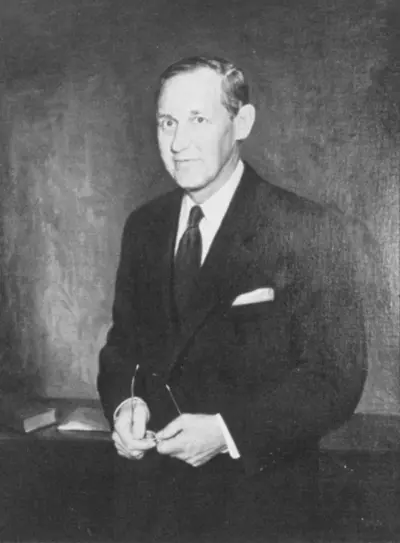
Harry Lloyd Hopkins was the 8th Secretary of Commerce, and President Franklin Delano Roosevelt's closest advisor on foreign policy during World War II. He was one of the architects of the New Deal, especially the relief programs of the Works Progress Administration (WPA), which he directed and built into the largest employer in the country. In World War II, he was Roosevelt's chief diplomatic troubleshooter and liaison with Winston Churchill and Joseph Stalin. He supervised the $50 billion Lend-Lease program of military aid to the Allies.
