Nelson A. Miles Quotes
A Christian people who have for two hundred years kept a race in bondage, deprived of the advantages of civilization and religion, owe them a debt of gratitude which it would seem ungenerous to withhold.
Miles, Nelson A. "The Indian Problem." The North American Review, vol. 128, no. 268, 1879, pp. 304-314.


This moral statement from a New jersey Quaker abolitionist is not particularly noteworthy, However what makes this quote important is that Woolman traveled throughout the South preaching this as his main theme. At that time — before the American Revolution — he did so and was not attacked or intimidated; he was mostly ignored by the Southern authorities. At the time, the South was very confident of its ability to continue slavery. Years later, when the abolition movement grew larger and stronger, a Northern Quaker Preacher doing this not not escape with his life.

Under questioning from Rep. Brandon Gill (R., Texas) in a House Oversight Committee hearing, March 26, 2025, Maher denied reading the referenced book or that she believed what she tweeted.


Later changed the name to The Emancipator. Many are surprised that a Southern State would have had such strong abolitionist sentiment so early, but East Tennessee was a hotbed of abolition. See {614117} and {614069}

Benezet was a Huguenot whose family had been persecuted in France. He identified with the cause of Blacks, Indians and Acadians. He was also one of the first leaders of the American Peace Movement.


The issue of slavery which had been suppressed in Congress for the first decades of the nation broke out when Missouri statehood was considered. By previous agreement, slavery was not even discussed in Congress but the time period elapsed. Tallmadge not only proposed that no more slaves could come into Missouri {613176} but most shocking to the Southerners was that every person born in the new state would be free at the age of 25. In a generation, there would be no more slavery in Missouri and there would be no economic compensation for slave owners at all. The House of Representatives accepted the amendment, but it failed in the Senate. At that time, Senators were not elected by voters but were appointed by the state legislators and the Southern slave states had a disproportionate share of the senate from a population point of view. But what this quotation shows clearly that a majority of the country in 1819 were opposed to slavery and were willing to end it without compensation.


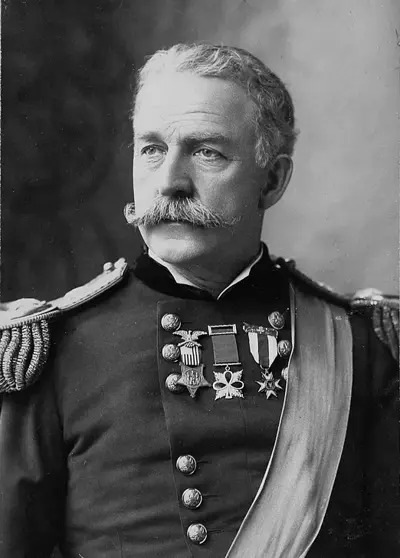
Nelson Appleton Miles was an American military general who served in the American Civil War, the American Indian Wars, and the Spanish–American War. From 1895 to 1903, he served as the last Commanding General of the United States Army before the office was abolished.
