Frederick Douglass Quotes
The work does not end with the abolition of slavery but only begins.
Frederick Douglasss, ~1817-1895, Abolitionist & Editor, Recorder of Deeds, District of Columbia, U. S. Minister to Haiti, Quoted on PBS The Civil War, September 23, 1990
Sourced by: Eigen's Political and Historical Quotations

This quotation is very interesting historically. Despite the fact that Washington DC was a thoroughly racially segregated city, and the Southern racists controlled much of Congress, Blacks as well as whites were welcome in the Congressional galleries, and they attended many debates. Slavery and equality were not just debated in the 1850s but the issue was in constant friction from the earliest Congress.

This was an indirect slap at the Boy Scouts of America. At the time, racial segregation was legal and overtly practiced in the Southern States. The Boy Scouts could have been a great force for desegregation, but the leadership did not have that as a value for the organization. The Girl Scout leadership however saw the contradiction between segregation and the supposed values of America and their own organization. They were not only very active but very successful at desegregation at a time when they were atypical, and for most Americans, segregation was the norm.


The first sentence is inscribed on the Jefferson Memorial in Washington DC. The last two sentences are rarely quoted.


This was actually a very courageous statement for an American politician running for national office. As a result of the pressure of this statement President Franklin Roosevelt allowed Black enlistment in the Army Air Forces.


This was a very courageous speech for the President to give. Senator Hubert Humphrey had proposed civil rights legislation. At the time most of the racial conservative members of Congress were Democrats and not Republicans as they would become after Civil Rights legislation actually passed in 1964. There was little possibility that the civil rights law would pass as the Southern Democrats could filibuster it in the Senate. None the less Truman supported the legislation and the principle of equal rights despite the fact that he was a Southerner and he knew he would lose the support of the conservative wing of his party.


The issue of slavery which had been suppressed in Congress for the first decades of the nation broke out when Missouri statehood was considered. By previous agreement, slavery was not even discussed in Congress but the time period elapsed. Tallmadge not only proposed that no more slaves could come into Missouri {613176} but most shocking to the Southerners was that every person born in the new state would be free at the age of 25. In a generation, there would be no more slavery in Missouri and there would be no economic compensation for slave owners at all. The House of Representatives accepted the amendment, but it failed in the Senate. At that time, Senators were not elected by voters but were appointed by the state legislators and the Southern slave states had a disproportionate share of the senate from a population point of view. But what this quotation shows clearly that a majority of the country in 1819 were opposed to slavery and were willing to end it without compensation.

At the time, the Southern segregationists were all Democrats and they blocked any Democratic attempt to pass any Civil Rights legislation. When he could not get a Civil Rights commitment from his own party, Powell turned to the Republicans and the President wrote this letter. In return, in November, Powell endorsed and supported Eisenhower instead of Stevenson, his own party’s nominee. Eisenhower could not get any legislation on Civil Rights as the Southern Democrats would always block it. When President Lyndon Johnson finally forced the 1963 Civil Rights Act through the Congress, the racist Southern Democrats cut a deal with Goldwater and the conservative Republicans, and switched parties. Since then the Civil Rights stance of the two parties reversed. The Democrats were thereafter pro Civil Rights and the Republicans, the party of Lincoln and Reconstruction, thereafter reversed their Civil Rights position and opposed progress in this area.

Jamaica, then part of the British Empire which had outlawed slavery, was quite racially integrated with negroes and mulattos in civil positions such as magistrate. When the ship landed, the slave, John Anderson, was kept locked below deck since if he ran off and reached shore, the Jamaican authorities would have declared him a free man. The presence of the captive negro slave leaked out and a group of Jamaicans boarded the ship uninvited and forcibly removed Anderson, He was taken before a Jamaican magistrate who declared him a free person. The ship’s captain demanded that the authorities return the American private property which had been stolen from an American ship by a “mob”. Harrison, the US Counsel complained to the Jamaican Governor of the “Insult” to the American Flag that had taken place and demanded redress. In both efforts, the original decision of the magistrate was supported and Anderson was a free man. Harrison, an ardent Southerner from Virginia was apoplectic and asked the State Department to make this case a major issue in relations with London. His description of the public opinion then in Jamaica was classic. His racial bias was even supplemented by a virulent anti-Semitism because not only had Jewish Jamaican merchants supported abolition of slavery but some had intermarried with Negroes who had converted to Judaism.


Before the civil rights act was passed, most labor unions will racist and discriminated against black workers. The United Auto Workers union was an exception and Reuther was a strong advocate of desegregation and equal rights.


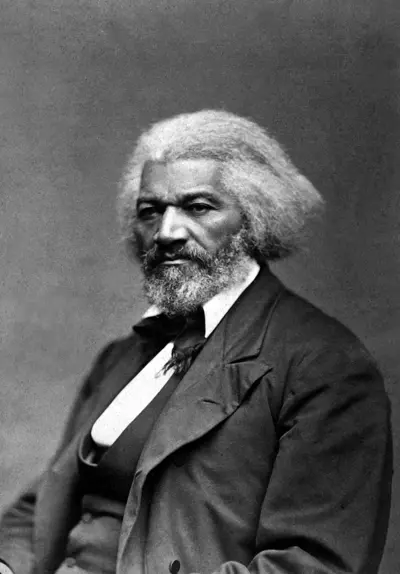
Frederick Douglass was an American social reformer, abolitionist, orator, writer, and statesman. After escaping from slavery in Maryland, he became a national leader of the abolitionist movement in Massachusetts and New York, becoming famous for his oratory and incisive antislavery writings. Accordingly, he was described by abolitionists in his time as a living counterexample to slaveholders' arguments that slaves lacked the intellectual capacity to function as independent American citizens. Likewise, Northerners at the time found it hard to believe that such a great orator had once been a slave.
