Earl Warren Quotes
In approaching this problem [school desegregation], we cannot turn the clock back...
Earl Warren, 1891-1974, Chief Justice, U.S. Supreme Court, Governor of California (Republican), Republican Vice Presidential Candidate (with Dewey), The Supreme Court in American History, 1965
Sourced by: Eigen's Political and Historical Quotations

Arkansas Governor Faubus ordered the national guard to prevent Black students from integrating Central High School in Little Rock. President Eisenhower was a man of action and not rhetoric and his lack of firm public statements overlooked an opportunity to use the Presidential “bully pulpit” and exercise his moral leadership and authority. Armstrong was irate at Eisenhower for appearing to do nothing and say nothing. See {615852}. When Eisenhower did enforce the court order and used Federal troops, Armstrong sent him this congratulatory telegram. His reference to walking into the schools was in support of many who suggested that the best thing the President could have done was to personally take one of the Black students by the hand and walk into the school with him or her. With the mood of the Southern racists, such an act was potentially very risky for the President and it is not known whether of not the President and his staff ever considered such an act.


Southerners and some others wanted to discriminate and fought civil rights legislation. The excuse they gave for opposition was that the Federal Government was usurping the power of the states to determine what civil rights people of the state would have. Shellabarger made it clear that the civil rights bill would not require ANY rights to be given. It just required that if the states granted rights, they could not discriminate by race as to those rights. But the states were free to decide which rights all citizens of the state would have. See {623473} .

At the time, the Southern segregationists were all Democrats and they blocked any Democratic attempt to pass any Civil Rights legislation. When he could not get a Civil Rights commitment from his own party, Powell turned to the Republicans and the President wrote this letter. In return, in November, Powell endorsed and supported Eisenhower instead of Stevenson, his own party’s nominee. Eisenhower could not get any legislation on Civil Rights as the Southern Democrats would always block it. When President Lyndon Johnson finally forced the 1963 Civil Rights Act through the Congress, the racist Southern Democrats cut a deal with Goldwater and the conservative Republicans, and switched parties. Since then the Civil Rights stance of the two parties reversed. The Democrats were thereafter pro Civil Rights and the Republicans, the party of Lincoln and Reconstruction, thereafter reversed their Civil Rights position and opposed progress in this area.

There are few people today who could believe that a United States senator would castigate the head of a Federal Agency for spreading “racial equality propaganda.” But at the time—1943—the actions of Education Commissioner John W. Studebaker and his Assistant took remarkable courage.

He was the first FHA administrator to make statements saying that non-discriminatory housing services should be available to the American people. He was not able to change the agency’s equal opportunity performance because the Southern states had laws allowing and protecting legal segregation especially in housing. The Southern staff interpreted his position to be sure that both blacks and whites had access to FHA services, but they used the “separate but equal” doctrine: Provide services to both races but always in segregated housing projects. This was typical of the kinds of problems that motivated the Civil Rights Acts offered by President Kennedy in 1963 and passed by President Johnson in 1964 See {637271} for a similar Mason statement.

In the 1930s African Americans who traveled were subject to countless humiliations whenever the sought hotels, rooming houses, restaurants and other accommodations. Gas stations would not allow them to use bathrooms and they were reduced to using open fields. Traveling and vacationing was, for Blacks, humiliating. Wikipedia: “Green reviewed hotels and restaurants that did business with African Americans during the time of Jim Crow laws and racial segregation in the United States. He printed 15,000 copies each year. In the 1930s, Green began his work by compiling data on stores in the New York area that accepted black travelers, and published his first guide in 1936. Similar guides had been published for Jewish travelers, who sometimes faced discrimination. Green's guide was so popular that he immediately began to expand its coverage the next year to other US destinations, adding hotel and restaurants as well.”


Following the lead of Arkansas, many southern schools were closed by order of the Governor when they received a court order to desegregate. Southern education was the poorest in the nation and the Southern students not able to go to school made the situation worse. Governor Almond changing his position realized that the cost of defying the Constitution and the courts was the ignorance of the students of the state, and became a major force persuading the state to integrate their schools. He is remembered for his leadership of desegregation and most people have forgotten that at the beginning of his term as governor he was as bad as most of the other Southern segregationist politicians.
The Quakers were in the forefront of not only the abolition of slavery but of the integration of the races.

This was a very courageous speech for the President to give. Senator Hubert Humphrey had proposed civil rights legislation. At the time most of the racial conservative members of Congress were Democrats and not Republicans as they would become after Civil Rights legislation actually passed in 1964. There was little possibility that the civil rights law would pass as the Southern Democrats could filibuster it in the Senate. None the less Truman supported the legislation and the principle of equal rights despite the fact that he was a Southerner and he knew he would lose the support of the conservative wing of his party.

The decision was 5-4 and reversed a trend in which the court had been going before. Roberts and another appointment by George W. Bush tilted the majority. See {614911} for a quotation from the 4 justice dissent.


This was actually a very courageous statement for an American politician running for national office. As a result of the pressure of this statement President Franklin Roosevelt allowed Black enlistment in the Army Air Forces.

Jessie Helms was his young assistant who drafted this race baiting ad. There are two vicious but subtle aspects to this kind of attach ads. First, not that the ad does not address the problem of white men working along side of blacks. It only refers to wives and daughter. This interracial sex innuendo played on and increased the fear of whites that Blacks would commonly rape white women. The second nasty aspect of the ad is the specific attack on the opponent. Instead of saying that he favored desegregation, the phrase “mingling of the races” was used which implied that Graham was in favor of biracial intermarriage and children—again another sex innuendo. When integration of the workforce finally occurred in the South, there was no increase in Black men sexually assaulting white women. There has been a substantial increase in racial intermarriage however as racial bigotry has diminished in America.


In the early 20th century, Carver and Du Bois were the two most important Negro leaders in America. However, they disagreed over tactics. Carver tended to believe that if the Negro would be educated and trained for meaningful occupations, he would rise in the eyes of the whites and discrimination would diminish. Du Bois was more cynical as can be seen in this quotation as he looked back on history when he was 95 and close to death. He had the advantage at this time of seeing that Washington’s strategy had failed, but he opposed Washington on this from the beginning. Most whites preferred Washington’s view as whites were relived of immediate moral responsibility for racism and the burden was placed on Blacks to train, develop and display themselves as worthy. It was only when very large numbers of Blacks had done this and nothing much changed in terms of civil and economic rights, that it was clear that Washington’ view had been hopelessly naïve.
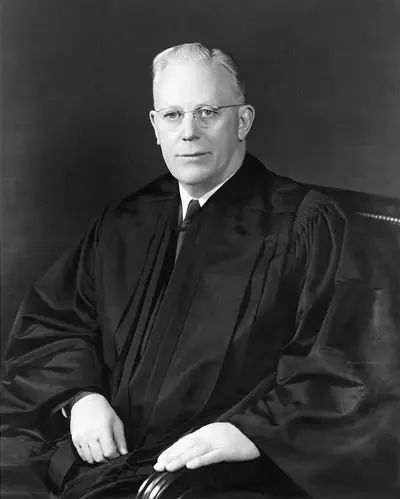
Earl Warren was an American politician and jurist who served as 30th governor of California from 1943 to 1953 and Chief Justice of the United States from 1953 to 1969. The "Warren Court" presided over a major shift in American constitutional jurisprudence, which has been recognized by many as a "Constitutional Revolution" in the liberal direction, with Warren writing the majority opinions in landmark cases such as Brown v. Board of Education (1954), Reynolds v. Sims (1964), Miranda v. Arizona (1966) and Loving v. Virginia (1967). Warren also led the Warren Commission, a presidential commission that investigated the 1963 assassination of President John F. Kennedy. He is the last chief justice to have served in an elected office before entering the Supreme Court, and is generally considered to be one of the most influential Supreme Court justices and political leaders in the history of the United States.
