Ruth Bader Ginsburg Quotes
We've come a long way from the days where there was state-enforced segregation. But we still have a way to go.
Totenberg, Nina. "Justice Ginsburg: 'We Still Have A Way To Go'." NPR, 5 May 2014.


In this case she provided the crucial 5th vote for the majority upholding racial preferences in affirmative action cases.


The reason this quotation is important, it was the first time in American history that a President had tied racial discrimination to morality. Before that other Presidents had argued against segregation on pragmatic grounds or on legal, Constitutional grounds. Kennedy’s private moral declaration had a huge impact on Black leaders throughout the country who heard about it by word of mouth. That statement forged a bond between JFK and Blacks while most whites did not see anything striking in the statement.

In the 1930s African Americans who traveled were subject to countless humiliations whenever the sought hotels, rooming houses, restaurants and other accommodations. Gas stations would not allow them to use bathrooms and they were reduced to using open fields. Traveling and vacationing was, for Blacks, humiliating. Wikipedia: “Green reviewed hotels and restaurants that did business with African Americans during the time of Jim Crow laws and racial segregation in the United States. He printed 15,000 copies each year. In the 1930s, Green began his work by compiling data on stores in the New York area that accepted black travelers, and published his first guide in 1936. Similar guides had been published for Jewish travelers, who sometimes faced discrimination. Green's guide was so popular that he immediately began to expand its coverage the next year to other US destinations, adding hotel and restaurants as well.”


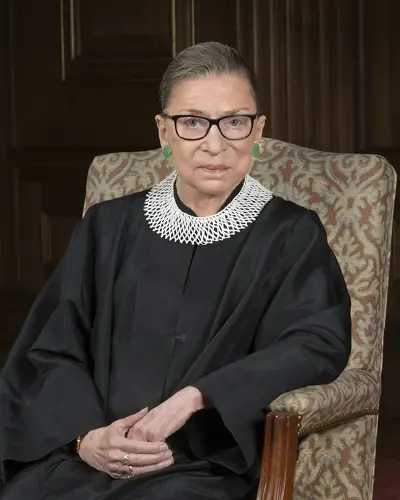
Joan Ruth Bader Ginsburg was an American lawyer and jurist who served as an associate justice of the Supreme Court of the United States from 1993 until her death in September 2020. She was nominated by President Bill Clinton, replacing retiring justice Byron White, and at the time was generally viewed as a moderate consensus-builder. She eventually became part of the liberal wing of the Court as the Court shifted to the right over time. Ginsburg was the first Jewish woman and the second woman to serve on the Court, after Sandra Day O'Connor. During her tenure, Ginsburg wrote notable majority opinions, including United States v. Virginia (1996), Olmstead v. L.C. (1999), Friends of the Earth, Inc. v. Laidlaw Environmental Services, Inc. (2000), and City of Sherrill v. Oneida Indian Nation of New York (2005).
