Frederick Douglass Quotes
I am not included within the pale of this glorious anniversary! Your high independence only reveals the immeasurable distance between us. The blessings in which you, this day, rejoice, are not enjoyed in common. The rich inheritance of justice, liberty, prosperity and independence, bequeathed by your fathers, is shared by you, not by me. The sunlight that brought life and healing to you, has brought stripes and death to me. This Fourth July is yours, not mine.
Douglass, Frederick. "What to the Slave Is the Fourth of July?" Speech, Rochester, NY, 5 July 1852.


Senator Glen Taylor was arrested on May 1, 1948, in Birmingham, Alabama by police commissioner Eugene "Bull" Connor, for attempting to use a door reserved for African Americans, rather than the whites-only door, while attempting to attend a meeting of the Southern Negro Youth Congress. He was subsequently convicted of disorderly conduct. It is hard to believe that such a thing happened in America but it did. ER was one of the few Democrats to condemn such behavior. She took a great deal of criticism from the Southern Democrats for this column. They claimed she called White Southerners “Stupid.”


The issue of slavery which had been suppressed in Congress for the first decades of the nation broke out when Missouri statehood was considered. By previous agreement, slavery was not even discussed in Congress but the time period elapsed. Tallmadge not only proposed that no more slaves could come into Missouri {613176} but most shocking to the Southerners was that every person born in the new state would be free at the age of 25. In a generation, there would be no more slavery in Missouri and there would be no economic compensation for slave owners at all. The House of Representatives accepted the amendment, but it failed in the Senate. At that time, Senators were not elected by voters but were appointed by the state legislators and the Southern slave states had a disproportionate share of the senate from a population point of view. But what this quotation shows clearly that a majority of the country in 1819 were opposed to slavery and were willing to end it without compensation.


The law went even further by requiring anyone employing a Black to have seen their certificate of freedom. This law in effect made slave escape to Ohio legally very difficult.

Johnson was then Vice President.


His solution was not to change the prejudice or improve the opportunity for Blacks but to have complete separation of the races. See {625687}.


[This was the first Abolition appeal written by a Black Man. It was published in Boston and despite the fact that it was very critical of whites, was very popular going through two more printings within the next two years.]
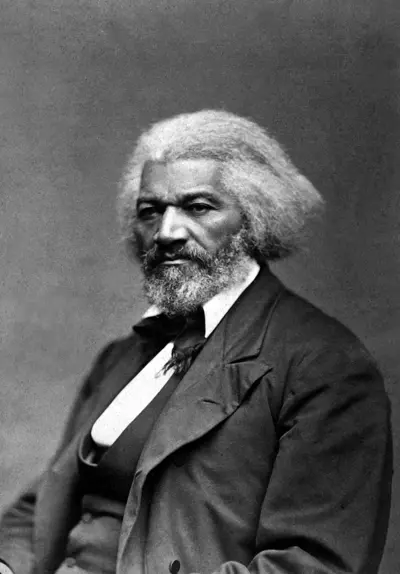
Frederick Douglass was an American social reformer, abolitionist, orator, writer, and statesman. After escaping from slavery in Maryland, he became a national leader of the abolitionist movement in Massachusetts and New York, becoming famous for his oratory and incisive antislavery writings. Accordingly, he was described by abolitionists in his time as a living counterexample to slaveholders' arguments that slaves lacked the intellectual capacity to function as independent American citizens. Likewise, Northerners at the time found it hard to believe that such a great orator had once been a slave.
