Theodore Hesburgh Quotes
The melting pot failed to function in one crucial area. Religions and nationalities, however different, generally learned to live together, even to grow together, in America. But color was something else. Reds were murdered like wild animals. Yellows were characterized as a peril and incarcerated en masse during World War II for no really good reason by our most liberal President. Browns have been abused as the new slave labor on farms. The blacks, who did not come here willingly, are now, more than a century after emancipation by Lincoln, still suffering a host of slavelike inequalities.
Theodore Hesburgh, President, University of Notre Dame, New York Times Magazine, October 29, 1972
Sourced by: Eigen's Political and Historical Quotations

Louis Eugene Walcott


His solution was not to change the prejudice or improve the opportunity for Blacks but to have complete separation of the races. See {625687}.


Warren a Republican from California who knew Palmer for years, stood up, put his arm around Palmer and told him, “Kyle, you and I will always be friends” and walked out.


[This was the first Abolition appeal written by a Black Man. It was published in Boston and despite the fact that it was very critical of whites, was very popular going through two more printings within the next two years.]


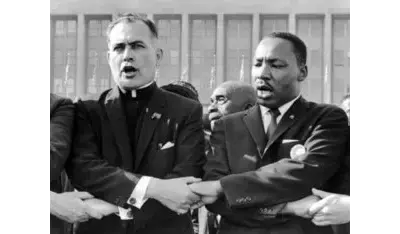
Rev. Theodore Martin Hesburgh, CSC was a native of Syracuse, New York, who became an ordained priest of the Congregation of Holy Cross and is best known for his service as the president of the University of Notre Dame for thirty-five years (1952–1987). In addition to his career as an educator and author, Hesburgh was a public servant and social activist involved in numerous American civic and governmental initiatives, commissions, international humanitarian projects, and papal assignments. Hesburgh received numerous honors and awards for his service, most notably the United States's Presidential Medal of Freedom (1964) and Congressional Gold Medal (2000). As of 2013, he also held the world's record for the individual with most honorary degrees with more than 150.
