Amiri Baraka Quotes
$5 a day was what Mr. Ford said, and Negroes came hundreds of miles to line up outside his employment offices.
Henry Ford had more than doubled the market wages of workers and shortened the work day. In his young years he hired Negroes to work on the Assembly line with whites. In his older years he would not when he had become a Hitler and Fascist admiring racist. This was of the Black migrations to Detroit to work in the Auto industry. See {642361} for Ford’s wage announcement.
Amiri Baraka, [LeRoi Jones], Poet & Music Historian, Description of Blacks in Detroit in 1914, Blues People: Negro Music in White America, 1963
Sourced by: Eigen's Political and Historical Quotations

Steel workers were then paid $1.75 for a 9 hour day. This was earthshaking.

This view was extremely popular with the White establishment but decried by Du Bois and a few other Black leaders. Unfortunately for African Americans and the rest of the country. Washington in this quotation turned out to be very wrong. Blacks quickly produced all kinds of goods and services that whites wanted, but the Jim Crow culture of the South and much of the North would simply not allow any relations between the races that might diminish the friction. Southerners for over 100 years blamed and resented the Negro for the destruction of the South in the Civil War and trying to act as if he was equal to the whites. And Blacks blamed whites for the century of slavery and then not enforcing the laws and denying them civil rights and equality.

The NAACP official magazine


Ever since the Civil War, there has been an imbalance between the areas of the country with large unemployed populations and those areas where jobs were available. Even in 1870, the authorities were trying to get the unemployed to relocate but this was a hard thing to do at the time—physically, economically, and psychologically. It was not until the 2nd World War when huge numbers of Blacks migrated from areas of poor economic prospects in the South to areas of opportunity in the North. Also, note the classic welfare dilemma expressed whereby if humanitarian assistance is provided, people will not be desperate enough to move to areas with better opportunities.

Following the lead of Arkansas, many southern schools were closed by order of the Governor when they received a court order to desegregate. Southern education was the poorest in the nation and the Southern students not able to go to school made the situation worse. Governor Almond changing his position realized that the cost of defying the Constitution and the courts was the ignorance of the students of the state, and became a major force persuading the state to integrate their schools. He is remembered for his leadership of desegregation and most people have forgotten that at the beginning of his term as governor he was as bad as most of the other Southern segregationist politicians.

It was fairly common for Englishmen to never have been more than 50 miles from his place of birth. Transportation was slow and crude and expensive. At the same time, economic conditions were relatively good in England eliminating the necessity of migration for survival—unlike Scotland which had much more mobility. Although Toynbee observed the greater mobility of labor in the United States, at the time it was much less than it became with the construction of the National Highway System and the dominance of the automobile as a mode of transportation followed by low cost air transport.

Jessie Helms was his young assistant who drafted this race baiting ad. There are two vicious but subtle aspects to this kind of attach ads. First, not that the ad does not address the problem of white men working along side of blacks. It only refers to wives and daughter. This interracial sex innuendo played on and increased the fear of whites that Blacks would commonly rape white women. The second nasty aspect of the ad is the specific attack on the opponent. Instead of saying that he favored desegregation, the phrase “mingling of the races” was used which implied that Graham was in favor of biracial intermarriage and children—again another sex innuendo. When integration of the workforce finally occurred in the South, there was no increase in Black men sexually assaulting white women. There has been a substantial increase in racial intermarriage however as racial bigotry has diminished in America.

This was a momentous change of doctrine for the Mormon Church. Prior to this revelation, Mormons would very actively convert and accept Blacks as members but would not ordain a Black, This doctrine had made Mormons, who were themselves persecuted in America, more acceptable—especially in the Southern States. However, it had been a source of great political and intellectual embarrassment to the Church until Kimball resolved the problem with this declaration.

See {642361} for Ford’s announcement.

See {642361} for Ford’s announcement.


What his research has shown is that advanced degrees and advanced skills de not enable a person to earn more money in most areas of the nation as it did in 1970. Only in some areas called “means metros” can these skills produce an economic advantage for the worker. So educated and skilled people are abandoning many areas like Detroit or Cleveland for areas like New York City, Seattle or Austin—the means metros.


The Quakers were in the forefront of not only the abolition of slavery but of the integration of the races.

Jefferson was one of the first political and economic thinkers to express concern over the “wage slave” concept of the industrial revolution. This was one of the major reasons that he was not in consonance with Alexander Hamilton in his economic vision for America. While we followed the Hamilton direction, there are still issues of maintaining freedom and independence for an employee in modern nations and economies.


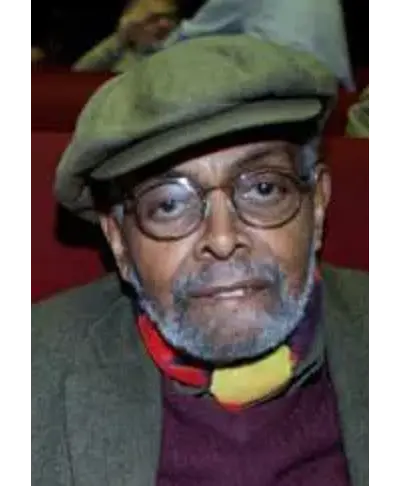
- Born: October 7, 1934
- Died: January 9, 2014
- Nationality: American
- Profession: Actor, Teacher, Theater Director, Theater Producer, Writer, Activist, Poet
Amiri Baraka, previously known as LeRoi Jones and Imamu Amear Baraka, was an American writer of poetry, drama, fiction, essays and music criticism. He was the author of numerous books of poetry and taught at several universities, including the University at Buffalo and Stony Brook University. He received the PEN/Beyond Margins Award in 2008 for Tales of the Out and the Gone.
