John Nance Garner Quotes
Worst damnfool mistake I ever made was letting myself be elected Vice-President of the United States. Should have stuck with my old chores as Speaker of the House. I gave up the second most important job in the Government for one that didn't amount to a hill of beans. I spent eight long years as Mr. Roosevelt's spare tire. I might still be Speaker if I hadn't let them elect me Vice-President.
John Nance Garner, 1868-1967, Vice President of the United States (Democrat, TX), Speaker of the House, Quoted in Saturday Evening Post, November 2, 1963
Sourced by: Eigen's Political and Historical Quotations

This quotation illustrates an interesting phenomenon in American Presidential Politics. There have been Democratic Presidents (FDR and Obama are the most glaring examples) for whom there was vituperative hatred and derision from the conservative Republicans who would frequently refer to them as Socialists and would believe that they were trying to lead the country on the path to socialism. The Presidents always stated that they were opposed to socialism, but to little avail with their conservative haters. But the socialists of the times and even the left wing of the Democratic Party not only did not see them as socialists, but were not very supportive or complementary of their skills and capabilities. Roosevelt reveled in the situation and “welcomed: their hate. Obama was more of a public centrist who tried to avoid the president getting involved in the extreme partisanship of the day.

Patton always believed that Eisenhower wanted to be President. At the beginning of the war Patton was much senior to Eisenhower, but President Roosevelt promoted Eisenhower above many more senior generals. Eisenhower thought Patton the best fighting general in the army, but a public relations and administrative problem. Several times when he had gone too far, Eisenhower reprimanded him but kept him in his command position. After the fighting was over, Patton became the military governor of part of Germany and was not as successful at peacekeeping and nation building as he was at fighting. Eisenhower was convinced that Patton would destroy himself and get fired by the army command and the President if he continued as governor. Patton confused Eisenhower’s prudent and politic demeanor with the allies as a lack of courage. And Patton could never get over the fact that Eisenhower and never commanded an army fighting in the field. He was jumped to Supreme Allied Commander, in a very bold and brilliant stroke by FDR who passed over many senior generals.

Before assuming the presidency in 1933, Franklin Delano Roosevelt and his wife called on President and Mrs. Hoover in the White House. Social custom required that the call be returned, but Roosevelt told the outgoing President, "I realize, Mr. President, that you are extremely busy, so I will understand if you do not return the call." Hoover responded:


Rogovin had just asked Califano how he felt about possibly being Republican congressman John Anderson’s running mate for the presidency

The ride was the 1933 inaugural where the outgoing President rode down Pennsylvania Avenue with his successor. Roosevelt had tried to engage Hoover in conversation and Hoover refused. For years after that FDR used to tell the story and would imitate Hoover with grunts and facial contortions.


In an irony, the first President limited by a term limit amendment pushed by Republicans remembering FDR turned out to be fellow Republican, Dwight D. Eisenhower.


In 1899, Theodore Roosevelt was a very popular governor of New York and was courted by many party leaders as a vice presidential candidate in 1900. The vice presidency then, as now, had many drawbacks. Roosevelt took the advice and became president upon McKinley's death.

Carter did much of his greatest work after his service as President.


Lippmann was the leading political pundit of the time. He, like many others, totally underestimated Roosevelt whose easy-going manner, and non ideological style tended to put off ideologues and some intellectuals. See {609696}.


The amendment was pushed by the Republicans in reaction to FDR's four terms, but its practical effect was to limit presidents Eisenhower and Reagan, both Republicans, to 2 terms while they each could have won a third term. Roosevelt had won 4 terms and traumatized the Republicans prompting them to term limit the American Presidency.
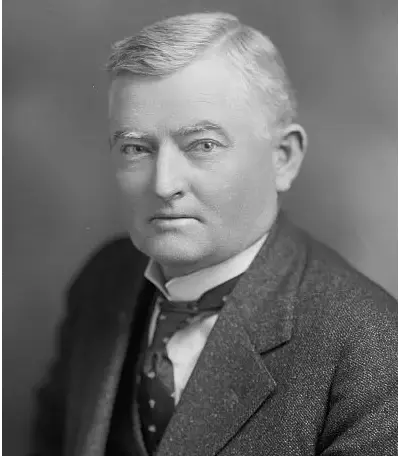
John Nance Garner III, known among his contemporaries as "Cactus Jack", was an American Democratic politician and lawyer from Texas. He was the 32nd vice president of the United States, serving from 1933 to 1941. He was also the 39th speaker of the United States House of Representatives from 1931 to 1933. Along with Schuyler Colfax, Garner is one of only two individuals to serve as both vice president of the United States and speaker of the United States House of Representatives.
