Sheila Bair Quotes
Why did we do the bailouts? It was all about the bondholders. They [the Treasury Department officials] did not want to impose losses on bondholders and we did. We kept saying, “There is no insurance premium on bondholders”… For the little guy on Main Street who has bank deposits, we charge the banks a premium for that, and it gets passed on to the customers. We don’t have the same thing for bondholders. They’re supposed to take losses.
The Treasure Officials had a reason for bailing out the bondholders. They were afraid that if bank bondholders and owners took big losses at that time, it would “spook” the financial markets and cause even worse panics than then existed. The political pressure would be to bail out the financial institutions which would have lost much more money after the “spooking”. So it was, they argued, less cost to the taxpayer to bail out the bondholders at the beginning and save the bailout costs later. Some argued that there was no reason to bail out the richest people in America if they lose a lot of money so it is not an issue of bail out now or later. History shoed that the financial leaders did have the clout to force the government to bail them out however. There are some who wanted to have a showdown with the wealth banks and other financial institutions and let them go bankrupt and then the economy would right itself. No one really knows for sure which is why Economics is called the “dismal science”—See {596873}.
Sheila Bair, Chairperson of the U.S. Federal Deposit Insurance Corporation (FDIC), Explanation of why she opposed bailing out the banks in the Meltdown of 2008 and the Great Recession that followed, Quoted in Joe Nocera, “Sheila Bair’s Bank Shot”, New York Times Magazine, July 10, 2011
Sourced by: Eigen's Political and Historical Quotations

Referring to the new science of political economics:

She was the only major Federal Official who did not support the bailouts of the banks and their bondholders and shareholders. Not one of her insured bank depositors lost their insured funds in the financial crisis. She protected them all but would not protect the banks themselves. Other officials did that and the following year the bank executives took the bailout money and paid themselves and others in the bank huge bonuses when the banks lost billions.


The Meltdown of 2008 and Great Recession that it caused

U. S. Treasury Secretary Larry Summers called Rajan a “Luddite” for this view, but what Rajan observed and predicted was exactly what happened in the Meltdown of 2008 which led to the Great Recession. Rajan was one of the few economists to call this right. Several, invested their own money assuming a crash and made billions. Most, like Summers and the Federal Reserve Chairmen in retrospect admitted that they missed the signs and didn’t connect the dots. See {637168}, {637987}, and {620038}

Born thought that her agency was responsible for regulating the new esoteric financial products—derivatives including credit default swaps—for otherwise there would be no regulation at all of financial products that could dwarf the stock and bond market. Summers persuaded her to back off. When the Meltdown of 2008 hit, the huge derivative exposure of the large banks and some insurance companies was so great that it was one of the major causes for the meltdown of the entire banking system. Summers, normally a great economist not only called this one wrong, but later, along with most other government and private economists ignored a very explicit warning—See {637168}, {637986}, and {620038}.
[Most Americans do not realize that not wall bank deposits are insured by the Federal Deposit Insurance Corporation (FDIC). That insurance covers only a basic amount ($250,000 at the time of the quotation was written, but nothing over the basic amount. There is no federal insurance for all the stock brokerage accounts. There is private insurance that will generally protect against the failure of a particular brokerage company failure, but that would not help in an industry wide failure]


Credit default swaps were in large part responsible for the melt down of the economy of 2008 and the Great Recession thereafter. A credit default swap was one of the favorite derivatives that became popular. Is an insurance policy that a company will pay off its bonds and not go bankrupt. It is a cross between an insurance mechanism and a stock exchange type security mechanism, and through heavy lobbying, escaped any kind of regulation. It cost a company no money to write a credit default swap, and they were paid to do so. As long as business and the economy was good, it was a terrific business but there was no way of ever knowing how much risk they were taking. So companies who wrote credit default swaps did not have to have the money to pay to back them up. When that happened in 2008, even the largest insurance company in the world collapsed because of the risk of having to pay the credit default swap and the U. S. Government had to take over the insurance company. In 2010, the Obama administration passed a financial reform bill that began to regulate credit default swaps. Buffet, the American who had made the most money in financial securities, realized the great danger not only to the company, but to the entire national economy. Most of the rest of the financial institutions, could make large amounts of money without have to have much capital as long as things went well. So credit default swaps began to exceed the other financial instruments in activity. Neither the Federal Reserve or the other government regulatory agencies chose to regulate these risky instruments nor even to require that they be publicly disclosed -- See {637987}, {637986} and {637992}.


Actually, even with higher capital requirements, the banks could take more risk but then they would have to risk their own money rather than their depositors’ funds. The depositors funds are at risk but if the risk pays off, only the bank and their executives profit. The depositors get nothing. If the bank loses their risky gamble, the major loss will be covered by the Government via a bail out and/or Federal Deposit Insurance money that protects most depositors. For the Banks, its “heads we win; tails the government loses”.

He was referring to Fannie Mae, the government-created. private mortage guarantee company. It was heavily regulated, and in general it met the regulatory requirements. However, the requirements were insufficient, and in the 2008 Meltdown and the Great Recession that followed, Fannie Mae itself was in such bad financial condition, that the Federal Government had bail them out or have the entire home mortgage industry fall apart.

Sovereign credit substitution is where the government, one way or another, assumes and guarantees the debts of private corporations. This is an elegant way of saying: “taxpayer bailouts”


4 years after the Great Recession where major banks of America needed government bailouts to prevent failure the Administration and Federal Reserve board wanted to increase the capital requirements to increase the safety of the Banks. Essentially the banks would speculate and gamble with depositors’ money. If their investment paid off, there were large profits and bonuses for the executives. If it did not, they ran out of capital as they had very little of their own at risk. The government bailed them out and the executives got their bonuses anyway. The efforts to make the banks speculate with more of their own money were strongly opposed by the banks and bank executives.

While Stockman and some others believe that the Meltdown of 2008 would have “run its course” if the government didn’t bail out financial institutions, the very conservative Republican Secretary of the Treasure Paulson and the Chairman of the Federal Reserve told President Bush, Congress, and incoming President Obama that if there was not a quick bailout, the economy of the nation would crash with a depression resulting as bad if not worse of the Hoover Depression of 1929. Bush and Obama and the majority of Congress agreed and took action to avoid that. There is no way of knowing whether they were right or Stockman was. However, the people with the responsibility of governing and safeguarding the nation clearly did not want to take a chance that the advocates of no action might be wrong.
The Chairman of the Federal Reserve Board, creatively found alternatives that the Fed had never used before and almost all experts did not even realize that were possible. He and Treasury Secretary Paulson, almost certainly saved the American system of capitalism. But in the process, they in the early stages and Bernanke throughout the crisis took a number of steps to save the system where the very people and companies whose actions had triggered the entire crisis seemed to personally benefit while most Americans were hurt badly and none of them received any immediate personal benefits the way the large bankers did. The amount of money that Bernanke and his Federal Reserve Board associates spend was staggeringly large and that too distressed many Americans. Almost all of the money was actually returned to the taxpayers as a result of the work of the Fed and the Treasury officials, but no one could feel good about the unfair disparity that had so benefitted much of Wall Street particularly and Main Street and the rest of American only generally while so many lost their jobs, their homes, their dignity and their hopes. Only the big banks and bankers also got a personal huge windfall of taxpayer money and took no risk for that. The alternative would have ruined everyone and even have been worse for the average citizen.
The Meltdown of 2008 came a year later and Citigroup, one of the largest banks in America, had massive liquidity problems and in order to stave off bankruptcy the taxpayers had to come up with $45 Billion. The bank executives, as this quotation demonstrates, knew that they were in a very risky situation and that if the subprime mortgages started to default, the “music would stop” and they and the other banks would have a massive liquidity problem. None the less, they kept on investing more and more of their bank customer’s money and making money in what they knew was a highly risky enterprise. The greed clouded their judgment and when the music stopped and many were no longer dancing, the Meltdown of 2008 almost destroyed the entire national economy and triggered the Great Recession where the overwhelming proportion of Americans had to suffer for the greed of those who could not “stop dancing” even as they knew it was very dangerous.

This was yet another warning about an area that became a major factor 4 years later in the Meltdown of 2008 and the Great Recession. The George W. Bush administration, however, rejected proposals to prevent more mortgage abuses by regulating the banks and mortgage brokerage industry more.

This warning was a decade before the Meltdown of 2008, but was not heeded by any of the politicians. As a result a number of the companies that made all those risky decisions assumed that if something went terribly wrong the government would not let them fail. Unfortunately, they were right and the taxpayers spent billions to prevent companies from failing. After the meltdown all the politicians vowed to end the too big to fail concept, but while some improvements were made, the Congress could not come to agreement, and the markets and a number of companies think that they are still too big to fail. This is particularly true for Defense Contractors where the government has and probably will in the future, protect irresponsible companies from failure if they are the only company that makes needed weapons and other equipment.
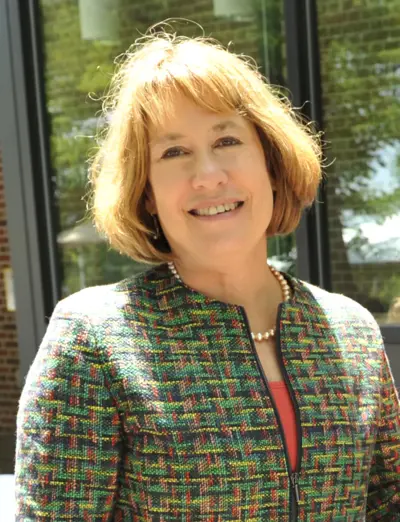
- Born: April 3, 1954
- Nationality:
- Profession:
Sheila Colleen Bair was the 19th Chair of the U.S. Federal Deposit Insurance Corporation (FDIC), during which time she assumed a prominent role in the government's response to the 2008 financial crisis. She was appointed to the post for a five-year term on June 26, 2006 by George W. Bush through July 8, 2011. She was also the 28th president of Washington College in Chestertown, MD, the first female head of the college in its 234-year history, a position she held from 2015 until her resignation in 2017.
