Warren Buffett Quotes
It’s very hard to write regulations that will prevent people from acting foolishly—particularly when acting foolishly has recently made them a lot of money.
Warren Buffet, Industrialist and Financier, Question & Answer Session, Georgetown University, September 19, 2013
Sourced by: Eigen's Political and Historical Quotations


The Meltdown of 2008 and Great Recession that it caused

He was referring to Fannie Mae, the government-created. private mortage guarantee company. It was heavily regulated, and in general it met the regulatory requirements. However, the requirements were insufficient, and in the 2008 Meltdown and the Great Recession that followed, Fannie Mae itself was in such bad financial condition, that the Federal Government had bail them out or have the entire home mortgage industry fall apart.


Born thought that her agency was responsible for regulating the new esoteric financial products—derivatives including credit default swaps—for otherwise there would be no regulation at all of financial products that could dwarf the stock and bond market. Summers persuaded her to back off. When the Meltdown of 2008 hit, the huge derivative exposure of the large banks and some insurance companies was so great that it was one of the major causes for the meltdown of the entire banking system. Summers, normally a great economist not only called this one wrong, but later, along with most other government and private economists ignored a very explicit warning—See {637168}, {637986}, and {620038}.

The result was regulation of the banks and the creation of the SEC to regulate the stock market, However, over the years, the regulations were not able to keep up with the sophisticated development of new forms of investments and financial instruments and the financial industry were able to speculate with other people’s money in ways that FDR and his reformers never imagined. Finally, even the regulation that did exist was weakened by the policies of the George W. Bush administration and the combination brought about the Great Recession of 2008 where the profits from excess speculation were privatized and the losses, socialized with the taxpayer and the American worker bearing the brunt while most of the speculators were bailed out and made more money than ever. The Obama administration tried to reform the situation, but was unable to put an end to the legal speculation with other people’s money or of having institutions that were “too big to fail.”


U. S. Treasury Secretary Larry Summers called Rajan a “Luddite” for this view, but what Rajan observed and predicted was exactly what happened in the Meltdown of 2008 which led to the Great Recession. Rajan was one of the few economists to call this right. Several, invested their own money assuming a crash and made billions. Most, like Summers and the Federal Reserve Chairmen in retrospect admitted that they missed the signs and didn’t connect the dots. See {637168}, {637987}, and {620038}

This was a very important quotation because Cox was a strong advocate of deregulation and voluntary regulation, and that is why he was appointed to head the SEC by George W. Bush. He was the leading Republican expert on Regulation of the Stock Markets and sale of public securities. However when the Meltdown of 2008 hit, it was clear to all but the extreme ideologues that some Federal regulation was necessary. Nonetheless, it took several years to reform the regulations for the financial industry with the Banks and Wall Street fighting it all the way and by that time the Republican Party had been so dominated by ideological conservatives that the views of Cox and others no longer had much influence. They fought the Dodd-Frank reforms to go preserve self regulation to a great extent.

At this time it was 6 years after the Home Financing Crisis and the Meltdown of 2008 and despite tens of thousands of law violations by the bank, the Justice Department was finally finishing their investigations and requiring some penalties. Other negotiations with other banks were in progress, but no bank executives were going to jail for the millions they handled fraudulently, whereas a burglar who stole household goods would do jail time.


Trump himself was known for being quite greedy and this admission was made before the Wall Street firms had been shown to be as greedy as they were during the aftermath of the 2008 economic meltdown recession when Wall Street Executives had their entire industry bailed out by the average taxpayer. Then they demanded their multi-million dollar bonuses while a large proportion of the people whose taxes bailed them out, were put out of work themselves by the greed, risk and profligacy of Wall Street.

Credit default swaps were in large part responsible for the melt down of the economy of 2008 and the Great Recession thereafter. A credit default swap was one of the favorite derivatives that became popular. Is an insurance policy that a company will pay off its bonds and not go bankrupt. It is a cross between an insurance mechanism and a stock exchange type security mechanism, and through heavy lobbying, escaped any kind of regulation. It cost a company no money to write a credit default swap, and they were paid to do so. As long as business and the economy was good, it was a terrific business but there was no way of ever knowing how much risk they were taking. So companies who wrote credit default swaps did not have to have the money to pay to back them up. When that happened in 2008, even the largest insurance company in the world collapsed because of the risk of having to pay the credit default swap and the U. S. Government had to take over the insurance company. In 2010, the Obama administration passed a financial reform bill that began to regulate credit default swaps. Buffet, the American who had made the most money in financial securities, realized the great danger not only to the company, but to the entire national economy. Most of the rest of the financial institutions, could make large amounts of money without have to have much capital as long as things went well. So credit default swaps began to exceed the other financial instruments in activity. Neither the Federal Reserve or the other government regulatory agencies chose to regulate these risky instruments nor even to require that they be publicly disclosed -- See {637987}, {637986} and {637992}.

The President, like most Americans, was outraged at the immoral, insensitive, and incompetent behavior of the financial industry in the Meltdown of 2008. However, the President learned how dependent the economy of the entire country was dependent on having solvent banks and how vulnerable the entire nation was to major failures of the investment and regular banks. So he was faced with very poor options. The government could have nationalized the banks, but that would produce an economic system which in the long run would not be very sound. Of the banks could be allowed to fail or risk failure in which case the entire population would suffer. Or he could lend money to the banks to stabilize and strengthen them while the bank executives were paying themselves huge bonuses even though they performed so poorly. He chose the latter and Warren was typical of criticism he received from many of his supporters. Even though the banks had broken the law and forged documents and committed perjury in tens of thousands of mortgage foreclosures, the President, as a practical matter, could not even prosecute the bank officials who were responsible because there were thousands of bank and other company officials who had committed the same crime. The guilty included almost every senior officer of the major banks, and jailing all these people was deemed impractical. So, to recover the economy, justice and fairness suffered.


Actually, even with higher capital requirements, the banks could take more risk but then they would have to risk their own money rather than their depositors’ funds. The depositors funds are at risk but if the risk pays off, only the bank and their executives profit. The depositors get nothing. If the bank loses their risky gamble, the major loss will be covered by the Government via a bail out and/or Federal Deposit Insurance money that protects most depositors. For the Banks, its “heads we win; tails the government loses”.
Sovereign credit substitution is where the government, one way or another, assumes and guarantees the debts of private corporations. This is an elegant way of saying: “taxpayer bailouts”

Moody’s and Standard & Poors, the 2 largest credit rating agencies, gave A ratings to securities that had packaged terrible F-rated, toxic, subprime mortgages, and gotten the credit ratings agencies to rate them as A on the theory that the risk was diversified. Each new security like this that a bank put out was submitted informally to one of the credit rating agencies to “discuss”. If the agency “concluded” that they could give it an A rating, they received a very large fee. If not, the bank would not officially submit the security and not pay anything. That almost never happened with these packages of subprime mortgages.
The Meltdown of 2008 came a year later and Citigroup, one of the largest banks in America, had massive liquidity problems and in order to stave off bankruptcy the taxpayers had to come up with $45 Billion. The bank executives, as this quotation demonstrates, knew that they were in a very risky situation and that if the subprime mortgages started to default, the “music would stop” and they and the other banks would have a massive liquidity problem. None the less, they kept on investing more and more of their bank customer’s money and making money in what they knew was a highly risky enterprise. The greed clouded their judgment and when the music stopped and many were no longer dancing, the Meltdown of 2008 almost destroyed the entire national economy and triggered the Great Recession where the overwhelming proportion of Americans had to suffer for the greed of those who could not “stop dancing” even as they knew it was very dangerous.
He was speaking for the Bush Administration. He was another regulation-opposed appointee of the George W. Bush Administration. He killed many regulations that had been developed to better regulate the banks and the mortgage industry to stop many of the obvious abuses of the industry. With few regulations in place, despite warnings such as {638024}, what had been greedy and dangerous practices of a minority of the industry became the vast majority when the bubble burst in the Meltdown. Note the rhetorical device of using “regulatory intrusion” rather than “regulation” or “more regulation”. This reflected an extreme conservative view that all regulation is bad – an “intrusion”, while most conservatives want a reasonable degree of regulation and not the elimination of all regulation.
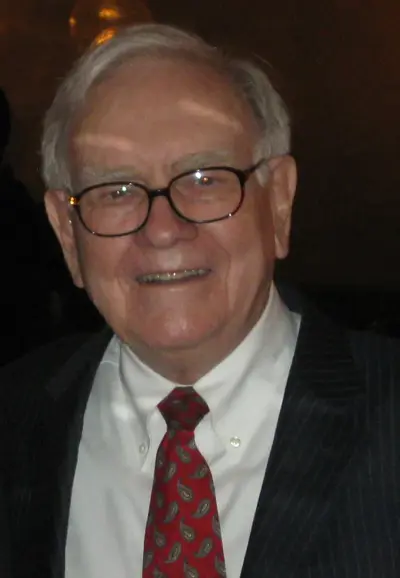
Warren Edward Buffett is an American investor, business tycoon, philanthropist, and the chairman and CEO of Berkshire Hathaway. He is considered one of the most successful investors in the world and has a net worth of over US$100.6 billion as of April 2021, making him the world's seventh-wealthiest person.
