Sheila Bair Quotes
Our job is to protect bank customers, not banks.
She was the only major Federal Official who did not support the bailouts of the banks and their bondholders and shareholders. Not one of her insured bank depositors lost their insured funds in the financial crisis. She protected them all but would not protect the banks themselves. Other officials did that and the following year the bank executives took the bailout money and paid themselves and others in the bank huge bonuses when the banks lost billions.
Sheila Bair, Chairperson of the U.S. Federal Deposit Insurance Corporation (FDIC), Explanation of why she opposed bailing out the banks in the Meltdown of 2008 and the Great Recession that followed, Quoted in Joe Nocera, “Sheila Bair’s Bank Shot”, New York Times Magazine, July 10, 2011
Sourced by: Eigen's Political and Historical Quotations

The Treasure Officials had a reason for bailing out the bondholders. They were afraid that if bank bondholders and owners took big losses at that time, it would “spook” the financial markets and cause even worse panics than then existed. The political pressure would be to bail out the financial institutions which would have lost much more money after the “spooking”. So it was, they argued, less cost to the taxpayer to bail out the bondholders at the beginning and save the bailout costs later. Some argued that there was no reason to bail out the richest people in America if they lose a lot of money so it is not an issue of bail out now or later. History shoed that the financial leaders did have the clout to force the government to bail them out however. There are some who wanted to have a showdown with the wealth banks and other financial institutions and let them go bankrupt and then the economy would right itself. No one really knows for sure which is why Economics is called the “dismal science”—See {596873}.

The result was regulation of the banks and the creation of the SEC to regulate the stock market, However, over the years, the regulations were not able to keep up with the sophisticated development of new forms of investments and financial instruments and the financial industry were able to speculate with other people’s money in ways that FDR and his reformers never imagined. Finally, even the regulation that did exist was weakened by the policies of the George W. Bush administration and the combination brought about the Great Recession of 2008 where the profits from excess speculation were privatized and the losses, socialized with the taxpayer and the American worker bearing the brunt while most of the speculators were bailed out and made more money than ever. The Obama administration tried to reform the situation, but was unable to put an end to the legal speculation with other people’s money or of having institutions that were “too big to fail.”


Sovereign credit substitution is where the government, one way or another, assumes and guarantees the debts of private corporations. This is an elegant way of saying: “taxpayer bailouts”

This warning was a decade before the Meltdown of 2008, but was not heeded by any of the politicians. As a result a number of the companies that made all those risky decisions assumed that if something went terribly wrong the government would not let them fail. Unfortunately, they were right and the taxpayers spent billions to prevent companies from failing. After the meltdown all the politicians vowed to end the too big to fail concept, but while some improvements were made, the Congress could not come to agreement, and the markets and a number of companies think that they are still too big to fail. This is particularly true for Defense Contractors where the government has and probably will in the future, protect irresponsible companies from failure if they are the only company that makes needed weapons and other equipment.

Alibaba—the largest e-commerce company in the world, larger than Amazon.com and eBay put together--had hundreds of millions of on-line Chinese buyers and hundreds of thousands of Chinese retailers. A huge proportion of Chinese retail sales go through Alibaba.


At the time of this interview there had been a decade of business fraud at many different levels. The regulatory agencies supposedly responsible for the regulation had neither the staff or the political will to even enforce the laws and regulations then in existence and there were many loopholes in those. Many business interests opposed all regulation and strict enforcement as a diminution of the health of the economy. Others, like Greenspan, saw fraud as corrupting the markets themselves and therefore the usual capitalistic economic competitive forces that would control business do not operate with extensive fraud.


The President, like most Americans, was outraged at the immoral, insensitive, and incompetent behavior of the financial industry in the Meltdown of 2008. However, the President learned how dependent the economy of the entire country was dependent on having solvent banks and how vulnerable the entire nation was to major failures of the investment and regular banks. So he was faced with very poor options. The government could have nationalized the banks, but that would produce an economic system which in the long run would not be very sound. Of the banks could be allowed to fail or risk failure in which case the entire population would suffer. Or he could lend money to the banks to stabilize and strengthen them while the bank executives were paying themselves huge bonuses even though they performed so poorly. He chose the latter and Warren was typical of criticism he received from many of his supporters. Even though the banks had broken the law and forged documents and committed perjury in tens of thousands of mortgage foreclosures, the President, as a practical matter, could not even prosecute the bank officials who were responsible because there were thousands of bank and other company officials who had committed the same crime. The guilty included almost every senior officer of the major banks, and jailing all these people was deemed impractical. So, to recover the economy, justice and fairness suffered.
4 years after the Great Recession where major banks of America needed government bailouts to prevent failure the Administration and Federal Reserve board wanted to increase the capital requirements to increase the safety of the Banks. Essentially the banks would speculate and gamble with depositors’ money. If their investment paid off, there were large profits and bonuses for the executives. If it did not, they ran out of capital as they had very little of their own at risk. The government bailed them out and the executives got their bonuses anyway. The efforts to make the banks speculate with more of their own money were strongly opposed by the banks and bank executives.

He was referring to Fannie Mae, the government-created. private mortage guarantee company. It was heavily regulated, and in general it met the regulatory requirements. However, the requirements were insufficient, and in the 2008 Meltdown and the Great Recession that followed, Fannie Mae itself was in such bad financial condition, that the Federal Government had bail them out or have the entire home mortgage industry fall apart.
Greenspan was not the amoral fool that this quotation makes him seem. Despite the fact that he was the most important financial officer of the country, he had an ideological faith that a free market was self-corrective in a democracy. The financial industry would police itself he believed. He also trusted the self interest of the financial corporations to restrain them from getting too greedy -- {637989}. He and many others were wrong and most Americans paid the price.

The Consumer Finance Protection Bureau was established over much Conservative opposition in the reforms that were established in the wake of the Meltdown of 2008 and the Great Recession. And the Republican Party was critical of everything that it did. The issue of whether or not the Federal government should even have a role in consumer protection was been debated for over a century. This quotation is very ironic in that the first major federal legislation to assist American consumers was pushed though by Republican President Theodore Roosevelt. Over 100 years later, it was the Republican Party that fought to weaken or eliminate Federal efforts. Ryan, the Republican legislative leader, led the effort. Ironically, most businesses agreed with him about the micromanagement as it was they who had to change their modes of operation to comply with CFPB regulation, but the vast majority of consumers did not feel that they were being micromanaged although many agreed that the companies interacting with consumers were certainly being managed much more tightly.


At this time it was 6 years after the Home Financing Crisis and the Meltdown of 2008 and despite tens of thousands of law violations by the bank, the Justice Department was finally finishing their investigations and requiring some penalties. Other negotiations with other banks were in progress, but no bank executives were going to jail for the millions they handled fraudulently, whereas a burglar who stole household goods would do jail time.

After the Great Recession the Mexican bankers, like their American counterparts, tightened their credit standards so much that the only people who could get loans were the ones who didn’t need it. If banks do not make loans, it matters not that they are solid institutions that are well capitalized.
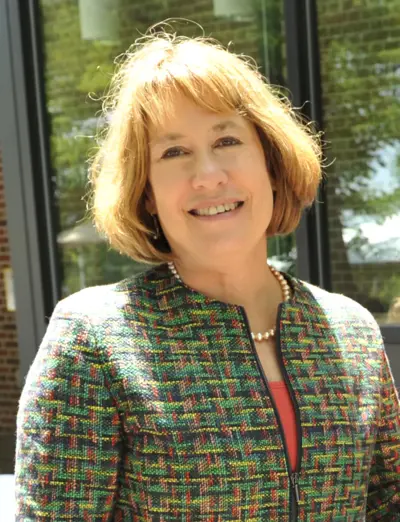
Sheila Colleen Bair was the 19th Chair of the U.S. Federal Deposit Insurance Corporation (FDIC), during which time she assumed a prominent role in the government's response to the 2008 financial crisis. She was appointed to the post for a five-year term on June 26, 2006 by George W. Bush through July 8, 2011. She was also the 28th president of Washington College in Chestertown, MD, the first female head of the college in its 234-year history, a position she held from 2015 until her resignation in 2017.
