Judd Gregg Quotes
Whether or not you have good consumer protection has a big effect on safety and soundness of the banking community, especially smaller banks.
United States, Congress, Senate, Committee on Banking, Housing, and Urban Affairs. Hearings Before the Committee on Banking, Housing, and Urban Affairs. Government Printing Office, 2010.

She was the only major Federal Official who did not support the bailouts of the banks and their bondholders and shareholders. Not one of her insured bank depositors lost their insured funds in the financial crisis. She protected them all but would not protect the banks themselves. Other officials did that and the following year the bank executives took the bailout money and paid themselves and others in the bank huge bonuses when the banks lost billions.


4 years after the Great Recession where major banks of America needed government bailouts to prevent failure the Administration and Federal Reserve board wanted to increase the capital requirements to increase the safety of the Banks. Essentially the banks would speculate and gamble with depositors’ money. If their investment paid off, there were large profits and bonuses for the executives. If it did not, they ran out of capital as they had very little of their own at risk. The government bailed them out and the executives got their bonuses anyway. The efforts to make the banks speculate with more of their own money were strongly opposed by the banks and bank executives.


The result was regulation of the banks and the creation of the SEC to regulate the stock market, However, over the years, the regulations were not able to keep up with the sophisticated development of new forms of investments and financial instruments and the financial industry were able to speculate with other people’s money in ways that FDR and his reformers never imagined. Finally, even the regulation that did exist was weakened by the policies of the George W. Bush administration and the combination brought about the Great Recession of 2008 where the profits from excess speculation were privatized and the losses, socialized with the taxpayer and the American worker bearing the brunt while most of the speculators were bailed out and made more money than ever. The Obama administration tried to reform the situation, but was unable to put an end to the legal speculation with other people’s money or of having institutions that were “too big to fail.”


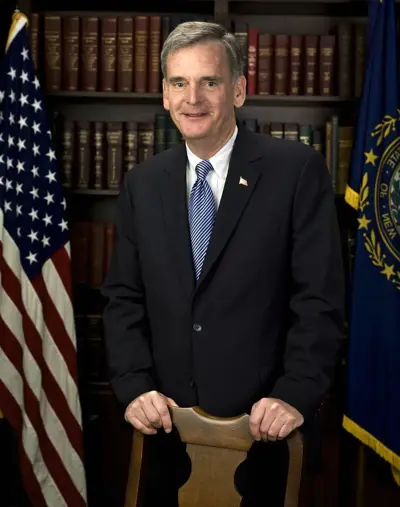
Judd Alan Gregg is an American politician and lawyer who served as the 76th Governor of New Hampshire and was a United States Senator from New Hampshire; in the Senate, Gregg served as chairman of the Senate Health Committee and the Senate Budget Committee. He is a member of the Republican Party and was a businessman and attorney in Nashua before entering politics. He currently serves as the Chair of the Public Advisory Board at the New Hampshire Institute of Politics at Saint Anselm College. Gregg was nominated for Secretary of Commerce in the Cabinet by President Barack Obama, but withdrew his name on February 12, 2009. He chose not to run for reelection to the Senate in 2010, and former State Attorney General Kelly Ayotte, also a Republican, was elected to succeed him. On May 27, 2011, Goldman Sachs announced that Gregg had been named an international advisor to the firm. In May 2013, Gregg was named the CEO of the Securities Industry and Financial Markets Association, a Wall Street lobbying group. He later stepped down as CEO in December 2013 and became a senior adviser.
