Moses Brown Quotes
Whereas I am clearly convinced that the buying and selling of men of what color soever is contrary to the Divine Mind manifest in the conscience of all men however some may smother and neglect its reprovings, and being also made sensible that the holding of negroes in slavery however kindly treated has a tendency to encourage the iniquitous practice of importing them from their native country and is contrary to that justice, mercy, and humanity enjoined as the duty of every Christian, I do therefore by these presents for myself, my heirs etc. manumit and set free the following negroes being all I am possessed of or any ways interested in.
His family was one of the wealthiest in Rhode Island. He called in the entire family and he formally read the deed. The family itself had actually been active in the slave trade under John, his oldest brother, so this deed was very shocking to them. Moses became a leading abolitionist in Rhode Island and John the major defender of slavery in the state. Despite that, the brothers actually remained close.
Moses Brown, 1738–1836, Industrialist & Abolitionist, Deed of Manumission, November 10, 1773
Sourced by: Eigen's Political and Historical Quotations

He was also himself a ship owner in the slave trade and he was the brother of the leading Rhode Island abolitionist, Moses Brown. See {585793}. Brown became the first American, prosecuted in federal court for illegal slave trading –-- a prosecution brought, in part, by his own brother. He was, however, acquitted.
Brown was then a member of the state legislature representing Providence. He was also himself a ship owner in the slave trade and he was the brother of the leading Rhode Island abolitionist, Moses Brown. See {585793}. John Brown became the first American, prosecuted in federal court for illegal slave trading –-- a prosecution brought, in part, by his own brother, Moses. He was acquitted.

The Sally was a ship that belonged to his family business that engaged in a slave trading voyage where many slaves were killed. It was a traumatic experience for Moses Brown and he became a staunch abolitionist and in this letter persuaded other Rhode Island merchants to avoid the slave trade. See {641478} and {585793}.


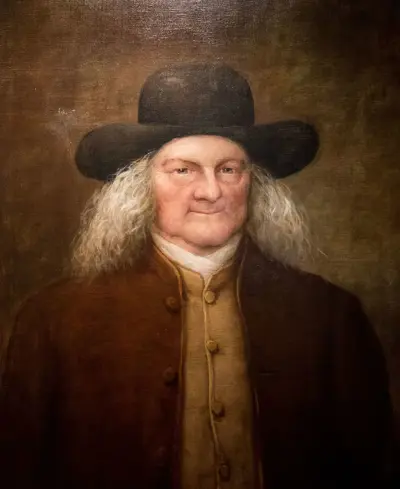
Moses Brown was an American abolitionist and industrialist from New England, who funded the design and construction of some of the first factory houses for spinning machines during the American industrial revolution, including Slater Mill. He co-founded Brown University.
