James Jackson Quotes
I apprehend, if through the interference of the general [Federal] government, the slave-trade was abolished was abolished, it would evince to the people a general disposition toward total emancipation.
On February 11, 1790 American Quakers submitted a petition to immediately abolish the African slave trade from America. Southerners like Jackson argued that the Congress should not even “consider” such a petition or debate such as subject for if it did, that per se, would imply the possible consideration of emancipation, and if that were possible, they would be on the slippery slope toward emancipation of existing slaves which would be the end of the world as the Southern whites then knew it.
James Jackson, 1757-1806, U. S. Congressman & Senator (GA), House Debate, 1790
Sourced by: Eigen's Political and Historical Quotations

His family was one of the wealthiest in Rhode Island. He called in the entire family and he formally read the deed. The family itself had actually been active in the slave trade under John, his oldest brother, so this deed was very shocking to them. Moses became a leading abolitionist in Rhode Island and John the major defender of slavery in the state. Despite that, the brothers actually remained close.

The National Enquirer was originally a serious abolitionist newspaper, not the sensationalist tabloid it became in modern times.

In this quotation Lincoln got out of the rhetorical trap that Douglas had set for him by disclosing his personal preferences as opposed to the positions that Douglas had accused him of being pledged to. See {615827}.

The issue of slavery which had been suppressed in Congress for the first decades of the nation broke out when Missouri was considered for statehood. By previous agreement, slavery was not even discussed in Congress but the time period elapsed. Tallmadge not only proposed that no more slaves could come into Missouri but most shocking to the Southerners was that every person born in the new state would be free at the age of 25. In a generation, there would be no more slavery in Missouri and there would be no economic compensation for slave owners at all. The House of Representatives accepted the amendment, but it failed in the Senate. At that time, Senators were not elected by voters but were appointed by the state legislators and the Southern slave states had a disproportionate share of the senate from a population point of view. But what this quotation shows clearly that a majority of the country in 1819 were opposed to slavery and were willing to end it without compensation.


The first anti-slavery newspaper published in the United States & the first journal in America to advocate immediate, unconditional emancipation

One of the many complaints that many people made at the time about Smith and his Mormons was that they opposed slavery. In fact, Smith not only opposed it be had a plan for compensating the slave owner and a method for paying for it. Smith was not advocating the kinds of personal lifestyle issues of his church the way modern religious leaders do, but was concerned with the much larger issues of expansionism, corruption of the courts and judiciary, and land distribution. He was a classic reform candidate in that sense. Smith had written to most of the then likely Presidential candidates of both major parties asking for their position on the Mormons who were facing persecution wherever they went. None of the politicians would make any satisfactory commitments. Smith took Direct Action and became the only major religious official to have run for the Presidency of the United States until Pat Robertson tried and failed in 2000. Smith’s assassination shortly thereafter cut his run for the Presidency short before it made much headway and politically he had no chance to affect the race.
This quotation is often given by those who argue that Lincoln really did not care about the slavery issue. It is a terrific example of the limitations of quotations where there is artful rhetoric. Douglas, had in the 1st debate posed 7 “interrogatories” to Lincoln asking if he were pledged to certain positions regarding slavery. Douglas was trying to associate Lincoln with the most radical abolitionists in the land. By asking if Lincoln were pledged to the positions, Douglas thought that he had cornered Lincoln. For if Lincoln denied the pledges, he would appear to be backing off his anti slavery positions, and if Lincoln would not, then he would appear to support the most radical elements. Lincoln turned the rhetorical tables on his opponent. He first answered the question literally, emphasizing “pledged”. Just as Douglas thought he had forced Lincoln off his anti-slavery views, Lincoln stated what he would “like to see” as opposed to what he was pledged for. See {615826}.

In addition, most state and local corrupt officials are detected, and prosecuted by Federal law enforcement officials as local and sometimes state corruption involves the local and state law enforcement officials as well as others so local authorities often turn a blind eye towards corruption.
A few years later he had a clearer idea of what was to be done. However, the additional factor of the Civil War played a big part in driving his Emancipation Proclamation. See {609360}

Even before we had a Constitution there was major opposition to slavery. The “price” of the American Union was the acceptance of the slavery of the South. But the hypocrisy of a country based on liberty to allow and enforce slavery was not lost on the founding fathers. Ironically the abolitionists among the founding fathers were certain that they could persuade the Southern slaveholders of the error of slavery in a few years and things would be set right in the land. Even George Washington {630626}, and Thomas Jefferson and some other slaveowners at the time wished to see its abolition. Slaveholding Southern Founding Fathers in general were so wary of the abolitionists that they achieved structural, disproportionate, power in the new Constitution to ward off the abolitionists attempts to reform slavery.

As an entertainer she had toured much of the world and seen American slavery and that of some other nations. She became a staunch abolitionist and like entertainers in the 20th and 21st centuries she used her celebrity to give anti-slavery lectures and perform for audiences where she donated the proceeds of the event to the abolition cause. She is a particularly interesting political figure in that she seems to be one of the first entertainers to perform for a social cause and become an activist.

Jefferson’s views, actions and inactions regarding slavery are very complex and contradictory. This quotation is one example of the many statements and activities to end slavery. Yet he never freed his own slaves (as did George Washington) and he fathered a child by one of his slaves with no attempt at freeing even her and the child. The Andrew Dickson White article is one of the first serious studies of the Jefferson contradictions regarding slavery.
The 10th Amendment reserves powers to the states and limits the Federal Government’s powers. However, there are other clauses in the Constitution, like the Commerce Clause (Article I Section 8), which gives the Federal Government authority and control over Interstate Commerce, which in modern society permeates almost all activities of State government, The result is that the federal government / state government power division has been a political issue and not really a constitutional one. At the time Republicans advocated a literal 10th Amendment interpretation and the Democrats favored a stronger Federal Government with more authority and power as stated by the Commerce Clause. Roy had been trying to explain to his fellow Republican strategists that it is hard to attract Blacks to the remainder to the Republican Platform as long as they were insensitive to what the 10th Amendment meant to Blacks historically. The Southern states cited the 10th Amendment more than any other part of the constitution to justify their right to maintain slavery. It was the Federal Government that ended slavery. Under the rubric of the 10th Amendment the South managed to get rid of most of the racial civil rights Reconstruction reforms that were imposed by the Federal Government on the Southern States. And it was the 19th Amendment that was the authority for Segregation for 100 years. And the terrorism of the Klu Klux Klan and the lynching and terror imposed on Blacks by Southern states claiming the 10th Amendment right to do so. Finally, it was the Federal Government, overriding the 10th Amendment with the Commerce Clause and other parts of the Constitution that passed and enforced the Civil Rights Act, the Voting Rights Act, Desegregation and the end to Lynching and other Southern State-Sponsored terrorism. Blacks will not any time soon accede to having the 10th Amendment literal view of the role of government and if Republicans insist on that there would continue to be very few Black Republicans,


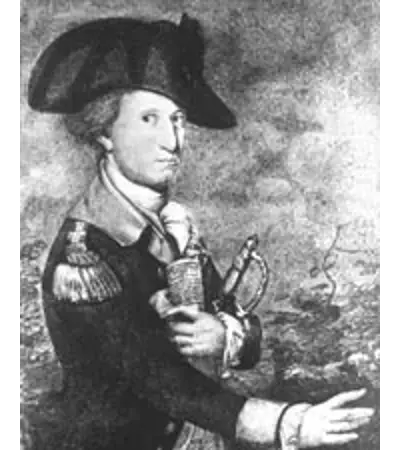
James Jackson was an early British-born Georgia politician of the Democratic-Republican Party. He was a member of the U.S. House of Representatives from 1789 until 1791. He was also a U.S. Senator from Georgia from 1793 to 1795, and from 1801 until his death in 1806. In 1797 he was elected 23rd Governor of Georgia, serving from 1798 to 1801 before returning to the senate.
