Pennsylvania Quotes
All persons, as well Negroes and Mulattoes as others, who shall be born within this state from and after the passing of this act, shall not be deemed and considered as servants for life, or slaves; and that all servitude for life, or slavery of children, in consequence of the slavery of their mothers, in the case of all children born within this state, from and after the passing of this act as aforesaid, shall be, and hereby is utterly taken away, extinguished and for ever abolished.
The Act was passed by the Pennsylvania General Assembly whose clerk interestingly enough was Tom Paine.
Pennsylvania, An Act for the Gradual Abolition of Slavery, March 1, 1780
Sourced by: Eigen's Political and Historical Quotations

It, would automatically emancipate all children born to slaves thereafter. It did not pass. The quote is given as evidence of Jefferson’s attempts to eliminate slavery but is in marked contrast to the fact that he never freed his own slaves nor emancipated slave children (including possibly his own child with his slave Sally Hemmings). In addition, compare this with {629765} and {630991}.
Jefferson’s views, actions and inactions regarding slavery are very complex and contradictory. This quotation is one example of the many statements and activities to end slavery. Yet he never freed his own slaves (as did George Washington) and he fathered a child by one of his slaves with no attempt at freeing even her and the child. The Andrew Dickson White article is one of the first serious studies of the Jefferson contradictions regarding slavery.

Washington was from Virginia, the largest of the slave states, and he himself owned slaves. In his will he emancipated all his slaves. Most of his fellow Southern Slave owners however not only disagreed about the abolition of slavery but were adamant that slavery spread so that the abolitionists never attain a majority.


Lincoln had promised amnesty to Southerners who would pledge loyalty to the Union. What many feared was that this would include slave owners re-enslaving their former "property," or that the government would allow them to do so in order to stop the rebellion.

One of the many complaints that many people made at the time about Smith and his Mormons was that they opposed slavery. In fact, Smith not only opposed it be had a plan for compensating the slave owner and a method for paying for it. Smith was not advocating the kinds of personal lifestyle issues of his church the way modern religious leaders do, but was concerned with the much larger issues of expansionism, corruption of the courts and judiciary, and land distribution. He was a classic reform candidate in that sense. Smith had written to most of the then likely Presidential candidates of both major parties asking for their position on the Mormons who were facing persecution wherever they went. None of the politicians would make any satisfactory commitments. Smith took Direct Action and became the only major religious official to have run for the Presidency of the United States until Pat Robertson tried and failed in 2000. Smith’s assassination shortly thereafter cut his run for the Presidency short before it made much headway and politically he had no chance to affect the race.


This quotation illustrates the strong abolitionist tendency in the Ohio Territory. Under this clause, escaped slaves from Southern states would not be returned by the state authorities. Even more insulting to the slave enthusiasts of the South, if a Southerner brought any slaves into Ohio with them as was common for Southerners traveling with their personal slaves or horse team drivers, those slaves would be free. An interesting aspect of this clause of the Ohio Constitution was that the beginning was, word for word, copied from the Northwest Ordinance of 1787. See {618100}.
One of the most amazing things about Abraham Lincoln is the way he grew and matured over time. In 1854 he was not sure that the Negro could be the equal of the white. As he met more Black leaders, saw more, reflected more, and had more responsibility, he grew and developed his views on race. But it was statements like this that led to the great distrust that the very strong abolitionists like Wendell Phillips had in him.
Earlier {629154} Smith was much more sympathetic with slavery. His views evolved as you can see by the comparison. He stated that he had a vision and made two prophesies {629156} that indeed came true. The last idea of slave buyouts seemed plausible to many abolitionists initially when they were not really knowledgeable about the economics of slavery. However, once they studied it, it became clear what it would not work even if the Southerners would then be willing to accept Blacks as free laborers which most were not, The two biggest problems were: 1) the international slave trade had been abolished. The only source of new slaves for growth was breeding them. Therefore, having slaves had TWO economic values—the work that they could do and the reproduction of themselves. A critical mass of owned slaves produced an income forever. And for Southerners who were culturally adverse to work (see {629169}), just having cash for their slaves was not enough. They were the servants, the farm labor, and their recreational sex. 2) and most important, the value or the slaves of the South was greater than the economic value of all the land, all the farms, all the buildings, all the factories, and all the inventory of the stores of the South all put together. The Southern slaves were the majority of the wealth of the south. There was no asset that could ever produce enough value to pay for the slaves—even over time. It would be like trying to buy all the shares of all the corporations in America today. There is no asset big enough to raise the money to ever finance it. The idea may have worked in Colonial America or even prior to the outlaw of the international slave trade, but by the time anyone took the idea seriously it was economically no longer feasible.

He was the Russian Reformer who ended serfdom and gave land to the peasants and then was assassinated. Ironically, both Alexander II and Lincoln were assassinated—because of their reform efforts—Lincoln for going too far; the Czar for not going far enough. See the Nickname that was given to the Czar: {622809}.
Jamaica, then part of the British Empire which had outlawed slavery, was quite racially integrated with negroes and mulattos in civil positions such as magistrate. When the ship landed, the slave, John Anderson, was kept locked below deck since if he ran off and reached shore, the Jamaican authorities would have declared him a free man. The presence of the captive negro slave leaked out and a group of Jamaicans boarded the ship uninvited and forcibly removed Anderson, He was taken before a Jamaican magistrate who declared him a free person. The ship’s captain demanded that the authorities return the American private property which had been stolen from an American ship by a “mob”. Harrison, the US Counsel complained to the Jamaican Governor of the “Insult” to the American Flag that had taken place and demanded redress. In both efforts, the original decision of the magistrate was supported and Anderson was a free man. Harrison, an ardent Southerner from Virginia was apoplectic and asked the State Department to make this case a major issue in relations with London. His description of the public opinion then in Jamaica was classic. His racial bias was even supplemented by a virulent anti-Semitism because not only had Jewish Jamaican merchants supported abolition of slavery but some had intermarried with Negroes who had converted to Judaism.

By 1863, Negro troops were being used to fill in gaps in the Union forces. Many union generals resisted having colored troops under their command. Thomas, however, welcomed them, and won several major battles where black soldiers were instrumental in victory.


This fear was great among many who were abolitionists as potentially there might be mass slaughter of all Southern whites.
The first anti-slavery newspaper published in the United States & the first journal in America to advocate immediate, unconditional emancipation

The military weapon of freeing the slaves was advocated from the earliest days of the Civil War. However, most Northern political leaders were sure that the South would be economically broken by emancipation, and many were hoping to end the rebellion swiftly by some military victories, and the Confederate soldiers could return to an economically viable South. If the slaves were freed, Southern soldiers would have little to return to and would all have to become laborers and thus would fight then to the death. However, the more battlefield success the South had, the more the combination of the moral pressure of the abolitionists and the practical strategic pressure of those who wanted to cripple the South militarily by freeing the slaves, influence Lincoln’s decision.


This quotation is very interesting historically. Despite the fact that Washington DC was a thoroughly racially segregated city, and the Southern racists controlled much of Congress, Blacks as well as whites were welcome in the Congressional galleries, and they attended many debates. Slavery and equality were not just debated in the 1850s but the issue was in constant friction from the earliest Congress.

Jefferson was an enigma with respect to slavery. Whereas he always abhorred it in his writings, and argued for an end to slavery, he maintained slaves himself and never did free them, unlike Washington, who spoke on the subject much less, but left orders in his will that all slaves were to be set free.
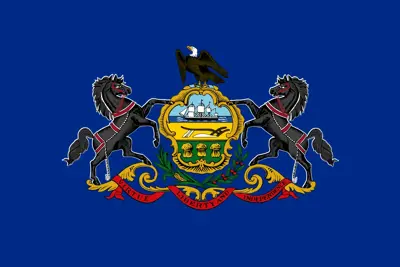
Pennsylvania (/ˌpɛnsəlˈveɪniə/ (listen) PEN-səl-VAY-nee-ə) (Pennsylvania German: Pennsilfaani), officially the Commonwealth of Pennsylvania, is a state in the Mid-Atlantic, Northeastern, and Appalachian regions of the United States. The Commonwealth is bordered by Delaware to the southeast, Maryland to the south, West Virginia to the southwest, Ohio to the west, Lake Erie and the Canadian province of Ontario to the northwest, New York to the north, and New Jersey to the east, while the Appalachian Mountains run through its middle.
