Stephen Lucius Gwynn Quotes
When the Highland [British] regiments were raised, most Irishmen were legally debarred even from enlisting in the ranks. But why? They were not debarred as Irishmen. They were debarred as Catholics. The Gael, if he became a Protestant as some did, was under no disabilities. What divides us is the state of mind inherited from times when citizenship was the privilege of one religion. Protestant ascendancy was adopted as a principle of British policy in the seventeenth century and throughout the eighteenth it had unrestricted play in Ireland, where the mass of the people were Catholic.
Protestant ascendancy was the policy of keeping Protestants dominant while allowing Catholics to worship but to be politically, socially, and economically subservient to the Protestants.
Stephen Lucius Gwynn, 1864–1950, Irish journalist, Protestant Nationalist Politician, Member of the British Parliament, “Ireland, One and Divisible”, Foreign Affairs, December 1924
Sourced by: Eigen's Political and Historical Quotations

It was not until 1780 that Catholics were allowed to even be members of Town Corporations.

Prime Minister William Pitt, Edmond Burke, and Irish Patriot Henry Grattan had met with the king to discuss granting Irish Catholics rights to participate in government. The King was quite bigoted against Catholics, but England was at war on the continent and if Irish Catholics were angry enough, they might conspire with the Catholic French for an invasion of Ireland. When the Protestant members of the Dublin Corporation heard about the meeting, they immediately issued their own resolution to the King recommending the continued discrimination against Catholics. In a huge political battle in the English Parliament, Pitt and Burke were able to make some progress. The Penal Laws against Catholics that had been in force for a century were repealed. And Catholic men in Ireland were given the right to vote for members of the Irish Parliament. However, the Conservative Protestants blocked further reforms and Catholics were still not allowed to sit in Parliament of hold public office. Between this quotation and {639274} we see the Irish Protestants somewhat divided with the liberals wanting to give Catholics political equality and the Conservatives opposed.

Many Protestant Englishmen were shocked to hear this, having little familiarity with the details of the functioning of the Church of England—the Established Church of Great Britain—in Ireland and the contribution of the Church to the discrimination against Irish Catholics and the poverty of Ireland.

There had been terrible religious wars between Catholics and Protestants in English history. The Protestants finally won and the Anglican Church of England became the “official” state church, but as England became a Democracy the power of the prelates and the church receded. However, there were fears of Catholic politicians in England that they were “controlled by the Pope” and if Catholics were too heavily part of the political system, the Pope might control and dominate English policy. Inge, one of the highest ranking Anglican clerics, allayed this fear, not by denying that the Popes and the Vatican might be interested in gaining more influence in England, but by appealing to the independence of the average Englishman and diminishing the spectre of the Pope by referring to him as an “Italian Priest.” As Inge and other high ranking Anglicans were in the English power system only English Priests. Inge at the time saw the Roman Catholic Church as a narrow, intolerant, monolithic anti modern institution. See {615671}. He argued that fear was inappropriate not because of the nature pf the Roman Church, but because of the characteristics of Englishmen, American Protestants had similar fears and Al Smith was defeated as President mainly because he was Catholic. For all but the worst religious bigots, this fear ended in America with the election of JFK.

In this extraordinary act, the people who are persecuted are made to pay extra taxes to facilitate their persecution

A force of 4,000 Spaniards, aided by Irish Catholics attempted to thwart the English Protestant Reformation forces in Ireland. They were defeated in their war by Lord Mountjoy. This is one of the many wars in history that was described as “holy” by one or both of its participants.

New Ross was under siege by Cromwell and his English Parliamentarian troops. After two days, the town tried to negotiate terms of surrender and one of the main things they asked for was freedom of religion to practice Roman Catholicism. This famous response set the stage for religious bigotry over the next years. Cromwell’s reasons for not allowing Catholicism to be practiced was not only one of religious zeal. At the time, the Roman Catholic Church was a major geopolitical power under a Pope who commonly supported or even dispatched troops for geopolitical and religious ends. The Vatican was particularly resentful of England for separating from the Church and asserting that the King of England was the head of the Church and not the Pope. Therefore Cromwell and many Englishmen had to deal with the reality that every practicing Catholic in the realm was a potential spy, traitor, and/or rebel. This fear of control of countries by the Pope strongly affected America, and was responsible for the defeat of the first Catholic Presidential Candidate, Al Smith. It was also a major factor in the election of John F. Kennedy so he dealt with it head on.

Poland was one of the Nazi occupied nations which cooperated in the mass murder of Jews and facilitated the Holocaust. Even after the war, much of the Polish Catholic clergy maintained virulent anti-Semitic views and in 1946 Polish thugs with the encouragement of some priests engaged in a pogrom in Kielce of returning Polish Jewish refugees. Catholic Primate of Poland, Augustus Hlond, made numerous anti-Semitic statements further exacerbating the problem. Many cast blame on Pope Pius XII who was not very vocal during the Nazi era regarding the ill treatment and murder of Jews, Gypsies, and handicapped, giving a “green light” to the Polish Prelate and those lower anti-Semitic priests. Papal apologists note that Hitler could have turned on the Catholic Church; the Pope had to walk a fine line between condemning evil and risking the welfare of the Church. Nonetheless, many Catholic priests risked and some lost their lives speaking out against the Nazi evil and protecting Nazi targets.
This quotation was used by the Lyndon B. Johnson 1964 Campaign as: “We represent the majority of the people in Alabama who hate niggerism, Catholicism, Judaism, and all the isms of the whole world.” So said Robert Creel of the Alabama Ku Klux Klan. He also said, “I like Barry Goldwater. He needs our help.” The second statement was made at a different time.


First Irish Bishop in the United States and the First Catholic Cardinal of New York. Moscow had just been burned by the French. No New York Catholic churches were harmed.

He had been an eye-witness to the Massacre of the Parisian Protestants as a young man.

The King Outlawed Protestant Worship.

What the historian did not know was how similarly the Protestants would behave against the Catholics when they had the power. Since the Catholics were the established church, and the Protestants the new “heretics” the Protestants were on the receiving end of most of the atrocities at the beginning. However, as if they had been scholled by their horrible experiences, they repeated them just exchanging the perpetrators and the victims.
At the time he was referring to Protestants & Catholics. Today we have Muslims vs. Jews & Christians.


This is a very important historical quotation in that it shows the extensive degree of anti-Catholic prejudice that existed in America in the late 1930s. Most of the anti-Catholic feeling was based in the absurd but real belief of millions of Protestants that the Pope was trying to control America. Then there was the fear and that American Catholics would take political direction from the Vatican and the Catholic bishops. The perception of the Church was hundreds of years out of date. Most of the anti-Catholic bias reduced along with anti-Semitism in the remainder of the 20th century as Americans became much more religiously tolerant. By the 21st century, religious prejudice still existed but it was limited to a small group of Americans whose views were generally condemned by the American mainstream of thought and opinion.

The origins of the extreme religious intolerance of Spain occurred centuries before the excesses of the Spanish Inquisition. Before the Conference the Visigoths and their king had been converted to Christianity but not all cared for the new religion.


There has been a similar demographic condition since.

The founders were all Irish Protestants. Yet in their initial charter, they called for proportional representation of Roman-Catholics. Not all the relations between Irish Catholic and Protestants were hostile. There was a commonality in their Irish nationality and many protestants—especially the educated and more sophisticated—were opposed to the restrictions imposed by England on the rights of the Roman Catholic to practice their religion or participate in government. See {639279} for another example.
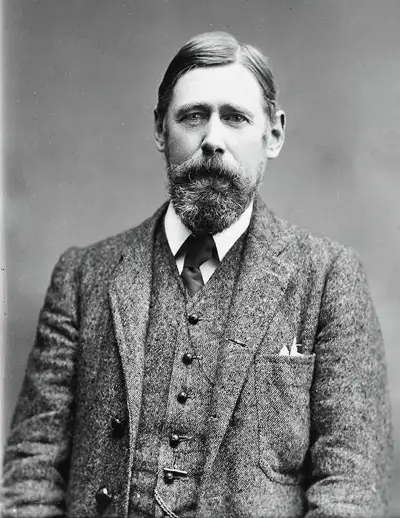
Stephen Lucius Gwynn was an Irish journalist, biographer, author, poet and Protestant Nationalist politician. As a member of the Irish Parliamentary Party he represented Galway city as its Member of Parliament from 1906 to 1918. He served as a British Army officer in France during World War I and was a prominent proponent of Irish involvement in the Allied war effort. He founded the Irish Centre Party in 1919, but his moderate nationalism was eclipsed by the growing popularity of Sinn Féin.
