Henry Dundas Quotes
There cannot be a permanency in the Constitution of Ireland unless the Protestants of Ireland will lay aside their prejudices, forgo their exclusive preeminence, and gradually open their arms to the Roman Catholics.
Henry Dundas, 1742--1811,, Scottish Member of the British Parliament, Secretary of State for the Home Department, First Secretary of State for War, Quoted in Jonathan Bardon, A History of Ireland
Sourced by: Eigen's Political and Historical Quotations


Not all the relations between Irish Catholic and Protestants were hostile. There was a commonality in their Irish nationality and many protestants—especially the educated and more sophisticated—were opposed to the restrictions imposed by England on the rights of the Roman Catholic to practice their religion. See {639274} for another example.
While the violence between the two religious groups had been eliminated by the peace negotiations, the two religious groups were as socially and physically disparate as they had always been.


There was freedom of religion for Protestants in early New Jersey. Note that Catholics and Jews were not allowed to hold office. This constitution was in force until 1844 when the prohibition was repealed by new constitution. Under the original constitution, men were convicted for blasphemy. See {621063} .


Anti Hindu prejudice has been a problem for Pakistan from the beginning of its founding.


He led an Islamic rebellion against the Quinn Dynasty which ended in his beheading in 1873. Since the Christians were also a minority, he tried to form an alliance with them. Hatred of Christians is not endemic to Islam—politics affect the situation also. His tomb is shown in the graphic.
While this was an excellent thing to do, it was opposed by most Catholics and Protestants alike. The Protestants did not want their children going to school with the lower class Catholics, and the Catholics feared that if the schools were desegregated the Protestants would control the curriculum and teach heresy to their children. The archbishop died 8 years thereafter, and there were too few enlightened intellectuals to keep the idea alive. Ironically, even in Northern Island of the 21st century, religiously integrated schools would be an excellent amelioration for the religious strife, but the majority of both religions still do not want it, and essentially for the same reasons as 175 years earlier.

The reform bill was developed by the then current Minister of Education who views were quite opposite to Corkey’s. One of the reforms was to eliminate the Bible Teaching and other religious instructions in the public schools. Then these other undesirables would enroll in the public schools whereas before, the Protestants were able to operate segregated public schools where very few Catholics would attend. The religious bigotry by the Catholics in the South of Ireland was equaled if not exceeded by that of the Protestants in Northern Ireland.


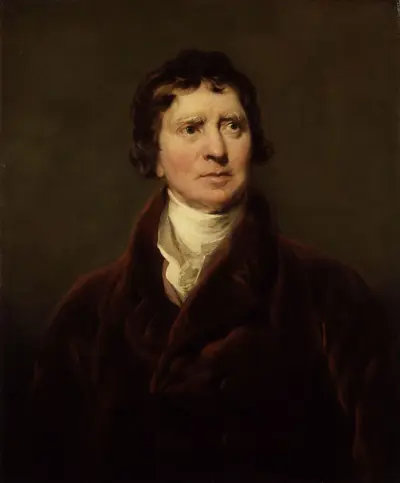
Henry Dundas, 1st Viscount Melville, PC, FRSE, styled as Lord Melville from 1802, was a Scottish advocate and "independent Whig" politician. He was the trusted lieutenant of British prime minister William Pitt, and the most powerful politician in Scotland in the latter decades of the 18th century.
