Stephen Lucius Gwynn Quotes
Every Irish person, good or bad, hates to see Ireland divided. But they differ profoundly as to how it should be united.
Stephen Lucius Gwynn, 1864–1950, Irish Journalist, Protestant Nationalist Politician, Member of the British Parliament, “Ireland, One and Divisible”, Foreign Affairs, December 1924
Sourced by: Eigen's Political and Historical Quotations


Executed by the English for his part in the Easter Uprising.


A delegation from Sinn Fein, headed by Arthur Griffith and Michael Collins, had negotiated a treaty of Irish Independence except that it did not cover Northern Ireland where the majority of the people wanted to stay a part of Britain. For 700 years, the Irish had fought for independence, and finally they got it for the vast majority of Ireland and the overwhelming majority of the Catholics of Ireland. The alternative to agreeing to the treaty was to continue the war between the IRA and the British Troops. At the time, the IRA was just about totally beaten and probably could not hold out another month. De Valera, a very shrewd politician, as the leader of Sinn Fein (and the IRA) would normally have headed the Irish Delegation. But he chose not to because he realized that they would never get independence for all 32 counties of Ireland as the British would not leave the Northern Ireland Protestants to their fates against their will. The best Ireland could get was Independence for all of Catholic majority Ireland. And he knew that public opinion would oppose giving up even one county becuse that was what the leaders had told the people for years. So De Valera let his two associates take the popular blame after he denounced the treaty with his famous quotation {639690}. Shortly after that, Michael Collins, the brilliant military Commander of the IRA who signed the treaty was assassinated. To many, it was as if De Valera had pulled the trigger. The treaty was ratified by a 7 vote margin by the Dail as there was no army left to fight, and the angry Irish electorate voted for De Valera as Ireland’s first President. The politician had won; the patriot had died.


He was elected to Parliament while in jail and never took his seat as he died as the result of a hunger strike in jail.
The Catholic majority was politically dominated by the Protestant minority in Ireland and the English Parliament generally sided with and supported the Protestants. O’Connell was open to Ireland being a part of the British Empire if it was the majority Catholic Ireland that was a part of the Empire.

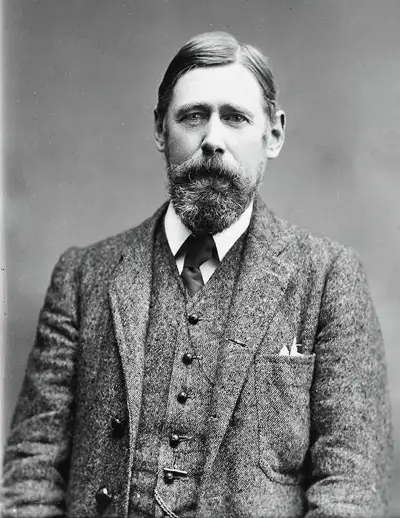
Stephen Lucius Gwynn was an Irish journalist, biographer, author, poet and Protestant Nationalist politician. As a member of the Irish Parliamentary Party he represented Galway city as its Member of Parliament from 1906 to 1918. He served as a British Army officer in France during World War I and was a prominent proponent of Irish involvement in the Allied war effort. He founded the Irish Centre Party in 1919, but his moderate nationalism was eclipsed by the growing popularity of Sinn Féin.
